


Dear readers,
"Shocking images", "terrifying hunting scenes", "skipper goes on the counter-attack", "horror among eyewitnesses", "sailors take revenge" - the tabloid media in particular have outdone each other in the past few days in choosing the most lurid phrases possible in order to attract as much attention as possible. With success, as we unfortunately have to recognise.
Countless comments on social networks were the result, in which the writers, apparently spurred on by very one-sided reporting, condemned the behaviour of a catamaran crew across the board as highly criminal. The crew had fired distress flares into the water in the Strait of Gibraltar near Tangier to scare away orcas, as can be seen in a mobile phone video circulating on the internet.
Five to six animals had previously approached their boat from aft and, according to the skipper, had dived under the stern. At least two of the animals probably hit the port rudder blade. The skipper then started the starboard engine and a crew member fired the distress ammunition into the water.
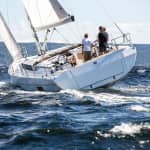
It is not known whether he hit one of the orcas or whether he deliberately aimed at one of the animals at all. This cannot be seen on the mobile phone video. The probability that an orca was injured or even killed during the action is probably very low. As soon as ammunition hits the water, it dramatically loses its penetrating power and sinks to the bottom after a very short distance.
And the noise generated when the ammunition was fired is also unlikely to have caused injury to the animals' hearing organs. Whether there was any "explosive" noise at all under water is also not known. However, many of the comments mentioned take it for granted and quickly equate it with cruelty to animals, which should be punished.
What's more, no matter how often it has been repeated in recent days, killer whales as a species are not threatened with extinction. It is true that individual populations living in certain regions have been decimated to a greater or lesser extent. Nevertheless, it goes without saying that all the world's whales should be protected.
However, this does not mean that you are not allowed to defend yourself against them if there is a risk to life and limb. Unfortunately, a crew on a sailing yacht that is attacked by orcas must now assume that this is the case. The killer whales have already sent three yachts to the depths in recent months, and numerous other boats have been damaged, some of them severely. It is only with luck that no one has been injured or even died as a result of the attacks.
In this respect, there is no reason to condemn the behaviour of the crew. The danger that the animals would have destroyed the rudders and the ship would have sunk as a result was real. Above all, however, the crew did not organise a hunt for the orcas, as was sometimes reported! According to the skipper, the animals quickly fled when a crew member fired the distress ammunition into the water. The catamaran sailors then did not chase after them "to take revenge", as was also claimed.
Whether the orcas actually fled out of fear or simply lost interest in the boat and continued on their way is also impossible to say. It is to be hoped, however, that the investigations now initiated by the Spanish authorities against the crew will make it clear that sailors whose boats are attacked by orcas are generally in an emergency situation and that they are therefore entitled to defend themselves with all available means.
However, there is little hope that reporting in the mass media or at least commentary on social networks will be more factual and fact-orientated the next time an incident of this kind occurs.
Pascal Schürmann,
YACHT copywriter
Newsletter: YACHT-Woche
Der Yacht Newsletter fasst die wichtigsten Themen der Woche zusammen, alle Top-Themen kompakt und direkt in deiner Mail-Box. Einfach anmelden:
Click to see through
The week in pictures:


Recommended reading from the editorial team:

Free nautical chart
Use BSH data free of charge in browser or app

Commercial nautical chart providers, subscription models, outdated data - that doesn't have to be the case. With freenauticalchart.net, there is now a free online nautical chart based on official BSH data that is automatically updated on a weekly basis. With tide forecast, tidal current atlas, plotting tools and GPS tracking - usable in the browser or as an app, completely without registration. We present the tool that is currently causing a stir in the sailing world.
New podcast episode
Port manoeuvres without a crash - how to dock successfully

Who isn't familiar with the nervousness as the harbour manoeuvre draws ever closer? Ole Pietschke from Pantaenius talks about this in the 62nd episode of our sailing podcast
Swan 51
Noble cruiser of the highest quality in the test

At 17 metres in length, she may be the smallest model from the Nautor shipyard, but with her luxurious fittings and excellent performance, she is something to rave about
Ghost ships
"Marlborough" - 20 skeletons on board

A Scottish three-master disappears without a trace in 1890 - and allegedly reappears in 1913: drifting off Punta Arenas, with tattered sails and 20 skeletons on board. The story went around the world, but even the details at the time sound suspicious. Was the "Marlborough" really a ghost ship - or just a perfectly narrated myth based on thin sources?
North Sea
BSH - Trials in the dark

At the end of March, the Federal Maritime and Hydrographic Agency conducts night-time tests off Heligoland with the specialised ship "Atair".
DGzRS
The first pictures of the new rescue boat

Shipyard diary of the sea rescuers: News on the construction progress of the prototype of the new boat class for the DGzRS. The SRB 90 is designed to be faster, lighter, more efficient and safer.
Esse 890
The Swiss answer to the crossover trend

Esseboats in Switzerland is building a new model. The Esse 890 takes on the sporty brand genes, but is very versatile with three variants for multiple uses.
Record attempt
Broken rudder off Madagascar - Guirec Soudée sails on

Shock for Guirec Soudée during the circumnavigation from east to west: a piece of the starboard rudder broke off in a collision on "Macsf".
Young, determined, offshore
Carla Hénon-Steck is on her way to the Mini Transat 2027

Carla Hénon-Steck (18) has just graduated from high school - and is planning the Mini Transat 2027 instead of a year abroad: crossing the Atlantic alone in a Mini 6.50.
Bundesliga
The league in upheaval, season starts in April

The German Sailing League will be 13 years old on 7 April. After good and difficult times, the championship series of the German clubs is in a state of upheaval.
Newsletter: YACHT-Woche
Der Yacht Newsletter fasst die wichtigsten Themen der Woche zusammen, alle Top-Themen kompakt und direkt in deiner Mail-Box. Einfach anmelden:
