


The Austrian Norbert Sedlacek is one of the most experienced solo sailors in the German-speaking world. In 2009, he made history by becoming the first German-speaking skipper to successfully complete the Vendée Globe – the toughest single-handed race in the world. What followed was to be even more ambitious: the ANT ARCTIC LAB.
The idea: a non-stop solo circumnavigation of the Earth via both polar circles – the Arctic and the Antarctic – using only renewable energy. The a boat specially developed for this purpose, made from vulcanised fibres and bio-resins was intended not only to set a world record, but also to serve as a test bed for new materials and technologies. More than a decade of development work, six launch attempts – and six abortions, all still in European waters.
During the most recent and final attempt, all the navigation electronics failed shortly before reaching Iceland. The team officially declared the project over. We spoke to Norbert Sedlacek immediately after the mission was called off – he was still at sea, on the way back to Les Sables.
Norbert, where are you at the moment – and how are you?
I’m sitting in my navigation corner, being shaken about like a rag doll. Since setting sail from Les Sables, there hasn’t been a single day when I haven’t had to battle against the wind. It’s a right pain. Last night the wind pushed me far out to sea; now I’m still about 70 miles off the southern Irish coast.

Have you been ashore anywhere since the project was cancelled?
No, not at all. I just sailed straight through.
What exactly happened? The official statement refers to a complete failure of the navigation systems.
All the navigation electronics have failed – from the wind and depth sensors right through to the chartplotter system; absolutely everything. Within an hour, one sensor after another failed, until suddenly nothing was working at all. The tricky thing is that there’s still a whole lot of other electrical and electronic equipment connected to it – including the backup system I’m currently using. And if that were to fail as well, the situation would be really serious.
Do you have an explanation as to what caused the outage?
My electronics specialist, Siegfried – the former owner of the company that installed our PC electronics – has done some research and found a known vulnerability in the Raymarine Connecting Box. There are reports from other users that, at some point, this box writes faulty data to the bus, causing one sensor after another to fail. Another theory is that a software update, which was downloaded via the internet connection, is no longer compatible with other parts of the system – meaning that some of the electronics are running on newer software and can no longer process the sensor data. But to be honest: if you ask ten experts, you’ll get eleven different opinions.
In 2018 and 2021, electronics and the power supply were also the cause of the mission being aborted. Why is this system on the ANT ARCTIC LAB so vulnerable?
The power supply was a development project right from the start. We developed the ServoProp from scratch in collaboration with Oceanvolt – I had the prototype fitted to my boat. It has developed really well since then; the hydrogenerators are running flawlessly, as is the battery system. The real problem lies in the complexity of the overall network. I’m now on the third generation of PC software that links everything together: navigation, weather programmes, sailing data and, most recently, two satellite systems – Starlink and Iridium – each with their own circuits. It has become an enormously complex system.
Would it not have been possible to build in more redundancy in order to minimise precisely this risk?
You’re absolutely right about that – but in the end, it’s always the budget that sets the limit. The whole thing already costs a lot, and if you start completely replacing old systems and rebuilding them from scratch, the costs skyrocket. On top of that, it’s currently extremely difficult in Europe to find partners who are willing to invest in development. There’s a lot of talk about innovation – but the reality in the nautical sector is completely different. I don’t currently have a single partner in the nautical sector who says: ‘We’ll test this; we’ll develop it further.’ The budgets simply aren’t there.
There have been no reported cases of such total electronic failures in the Vendée Globe – and some of the competitors are using similar systems. Why is the ANT ARCTIC LAB so much more prone to failure?
Our project is called ANT ARCTIC LAB – not the Vendée Globe. That’s the crucial point. When you’re refining products that aren’t yet fully developed, things like this can happen. But how else are you really going to test materials, electronics or technologies – other than under real-world conditions, in full operation? That’s the price of pioneering work. Unfortunately.
How close was the situation to a genuine emergency – and what was still working at that point?
There was never any danger to life or limb. What still worked: a backup PC for navigation, three independent GPS devices and autopilots that were not connected to the faulty data bus. What was out of action: radar, AIS, wind gauge, log – everything that even the most casual sailor now takes for granted.
In theory, then, it would still be seaworthy – why didn’t you at least head for a nearby harbour to carry out repairs and continue your voyage?
In theory, yes – as long as that one PC is still working. But that goes against the fundamental principle of the project. The ANT ARCTIC LAB has a clearly defined rule: non-stop, without outside help, from Les Sables back to Les Sables. If I make any stopovers, the project has failed. And carrying on with half-baked solutions, only to say ‘yes, but at least something worked’ – that’s not my way of thinking. If I set myself a goal and it’s unachievable, then it’s unachievable.
How long did you spend looking for the mistake – could you possibly have found it?
I spent hours doing this, as far as I could between sail changes and the usual deck work. But when you’re travelling at nine knots, with the wind buffeting the boat as it heels over, you can’t open any electronics boxes and search through them at your leisure – you have to secure everything; you can’t leave a spanner or any other tools lying about. If you lose your balance and get caught on a cable, you might end up breaking even more. It’s a real Sisyphean task. I’ve tested everything – from the sensor power supply through the distribution boxes right up to the BUS system. Siegfried sent me pages and pages of troubleshooting tips. We haven’t found anything.
Six attempts, six aborted missions – all of them still in European waters. Why is that?
There are certainly several factors at play. Yes, building a completely new electronic system from scratch would probably have cost between 50,000 and 70,000 euros plus labour costs – and would likely have made the system more stable. But I’ve also come to see the whole thing this way: there’s someone up there telling me I shouldn’t do it – just think about how old you are. That really dawned on me during this latest attempt. And, by the way, the hull itself is still in impeccable condition – absolutely flawless in terms of the laminate and materials. The design using vulcanised fibres and bio-resin works. The weak point has always been the electronics and their networking.
You’ll be turning 65 in January. Does your age play a part in this decision?
Others are retiring – I’m giving up on this sporting project, at least, and will carry on running my two companies. That works out fine. Seriously, though: it’s with a heavy heart that I’m saying goodbye to my sporting ambitions in this area. At some point, you have to accept that fate has decided: it’s not meant to be.
What do your partners and sponsors think about the cancellation?
With one minor exception that doesn’t really count, the response has been consistently positive. We’ve set up brands together with some of them, and driven forward product development with others. One of my partners even wrote after hearing the news: “Now you’ve got more time to focus on the commercial side – that’s great.” And he’s not entirely wrong. The commercial projects – the shipyard, the recycling programme, new products – have been somewhat neglected in recent years. I’m going to change that now.
How do you deal with public criticism?
Social media tempts you to write things very quickly that aren’t always entirely appropriate – including in terms of tone. As a public figure, you have to learn to deal with that. I don’t weigh up every single statement. Often, people who voice criticism simply lack a grasp of reality – they cannot even begin to imagine how complex, how exhausting and how risky such projects really are.
Looking back, how do you view the ANT ARCTIC LAB – and how do you see it fitting into your career?
For me, the Vendée Globe has always been the real goal. When I became the first German-speaking skipper to finish it in 2009 – at a time when the race wasn’t yet as highly professionalised as it is today – that was the pinnacle for me. Everything that came after that was just a bonus. That’s why I don’t feel like a failure now either. I haven’t achieved a sporting goal that no one before me has ever achieved. To anyone who thinks this is a walk in the park, let me say this: the ANT ARCTIC LAB route exists. The requirements are the waypoints and propulsion using renewable energy exclusively. Anyone is free to give it a go – I would support them to the best of my ability.
Does this really mean the ANT ARCTIC LAB is now a thing of the past?
Yes. Once you’ve mentally drawn a line under it, you can no longer carry on with a project like this. Every setback during this final attempt felt like a slap in the face. Now, all I care about is getting the boat safely to Les Sables, looking after it properly and then discussing with my partners what happens next. And then I’ll focus on the things that are still important in my life.
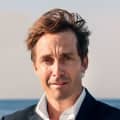
Martin Hager
Editor in Chief YACHT