


The share with the ticker symbol H9Y was not a success story, at least not in retrospect. After a brief, small upswing immediately after the issue, which was oversubscribed several times and brought a good 60 million euros in fresh liquidity, the value of 30 euros in the summer of 2007 quickly plummeted by around 90 per cent to just around three euros as a result of the financial and economic crisis. Except for an interim high in 2018, Hanseyachts remained at a low level.
Ten days ago, the unprofitable episode for investors as well as for the shipyard and its investors came to an end. On 14 May, the Frankfurt Stock Exchange granted the revocation of the stock exchange admission. The last trading day for the Hanseyachts share was 17 May. Small quantities of the shares are still traded on regional stock exchanges. However, the shares will soon disappear from over-the-counter trading there as well.
- Download free of charge: Initial euphoria at the IPO in a portrait of the then CEO Michael Schmidt (YACHT 8/2007)
Fixed rules for delisting under stock corporation law
Such a delisting is not unusual for smaller medium-sized companies, and the requirements for this are clearly regulated: Companies wishing to delist from the stock exchange must make shareholders an offer approved by the Federal Financial Supervisory Authority (Bafin), which is based on the average trading value of the share over the past six months. In the case of Hanseyachts, this value was 2.67 euros.
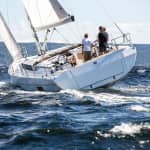

As part of the offer, which was valid from 10 April to 8 May, 5.26 percent of the shares were sold. This may not sound like much, but it is important to realise that Hanseyachts was only able to attract a small number of private investors from the outset, including owners and sailors. The free float at the time of the 2007 issue was 6.8 per cent. Before the delisting, it is said to have been around ten per cent. The vast majority of shares are held by the Aurelius Group, which now owns just under 85 per cent of the company.
High savings thanks to the elimination of future reporting obligations
Hanseyachts CEO Hanjo Runde cited the financial and personnel costs for the reporting obligations as the main reason for leaving the trading floor. Admission to trading on the regulated market is associated with "considerable burdens" for Hanseyachts, which do not contribute to profitability. "We can now invest the resources freed up by this step in the development of new yacht models," the CEO continued.
By cancelling the listing, we save over half a million euros in administrative costs every year"
It is a frequently cited reason for delisting, but certainly not the only one. Aurelius could have taken this step much earlier. Market observers believe it is more likely that the main shareholder was disappointed with the general willingness to invest; the last private placement following a capital increase attracted virtually no interested parties, which limited the opportunities to obtain new financial leeway via the stock market. Some analysts also believe that Aurelius wanted to create more room for manoeuvre for a long-announced sale of the shipyard.
In future, Hanseyachts will no longer have to make ad-hoc announcements, for example regarding profit warnings, and will no longer have to report on turnover and earnings development during the year. For boat buyers, who were previously able to obtain relatively up-to-date information on the course of business through the regularly due financial reports, the shipyard - the only German boat builder on the stock market since its IPO in 2007 - will thus lose its special status.
If you want to be on the safe side, especially with high-priced yachts with a construction period of several months, you should now agree a bank guarantee for the down payments or contractually stipulate another form of purchase price security - as is already generally recommended for boat purchases, even at other shipyards.
The company is currently well positioned and new developments are coming onto the market
Overall, Hanseyachts is currently well positioned after a restructuring phase in the previous two years. While the Beneteau Group, for example, is already working short-time in individual factories, production in Poland and Greifswald is still running at full capacity. And unlike the world market leader, the company is not cutting back on new developments either.
This late summer will see the launch of two important models, the Hanse 360 and 590, which are likely to ensure sustained demand. The Moody 48 DS has already been unveiled at boot Düsseldorf. And there will probably be something new from Dehler soon too. It's a shame that it will be some time before we find out how well they are doing in buyers' favour. Hanjo Runde, however, is already certain that they will be successful:
I am positive about the future because our innovation strategy with many new models has paid off and we are also expecting good capacity utilisation for 2025"
