


Sailing trip with fatal consequences: What happened on board the trimaran "Jolly Rose"?
Fabian Boerger
· 20.01.2026

- What happened on the first of August 2024?
- Trimaran in poor condition
- Clear evidence in sailing trial
- Witnesses in the sailing trial on water and in the air
- "The moment when the situation changed"
- Escape into the water
- Andreas F.: "I wanted to save him"
- Motive unsolved, but no doubts about the offence
A murmur goes through room 700 of the criminal court in Berlin-Moabit when the presiding judge announces the judgement on Monday afternoon: The jury chamber of the Berlin district court sentences a 66-year-old man to life imprisonment. Murder and intentional bodily harm is the verdict, which is not yet final.
The court considers it proven that the defendant, Andreas F., initially attacked his long-time friend and sailing companion, Thomas B., in the Kattegat off the Swedish west coast and later drowned him. The judges follow the public prosecutor's officewho had demanded life imprisonment. The defence had pleaded for acquittal.
What happened on the first of August 2024?
In his reasons for judgement in the sailor trial, the presiding judge spent almost an hour and a half describing what happened that day from the chamber's point of view.
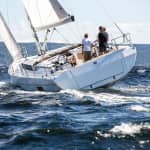
According to the report, the two men were on their way home from the "International Multihull Meeting" in Horten, Norway, in their F24 trimaran "Jolly Rose". They had set off there in mid-July. Almost two weeks later, on the way back: the route was supposed to lead from Horten via Marstrand, Sweden, back to Frederikshavn in Denmark.
The trailer in which they had both set off from Berlin had been parked there. Sailing was their shared hobby, several witnesses told the court.
Trimaran in poor condition
A few hours after setting off, at around ten o'clock, the two got into an argument. One reason: the poor condition of the boat, which had already led to friction beforehand. Water was constantly seeping in through a leak at the stern, life jackets were missing on board - and the engine was only running at high speed.
Thomas B. finally suggested repeating the trip in two years' time. Andreas F. agreed - but only if the trimaran was repaired first. This was the spark that caused the situation to escalate, according to the court. Initially, the two men wrestled, then Andreas F. hit B. on the head with a metal bar. Exactly why remained unclear in court.
F.'s defence lawyers presented their version in their plea last week: Thomas B. had allowed the argument to escalate, hitting and biting the defendant because he had criticised the poor condition of the trimaran. Andreas F. had merely wanted to defend himself. According to the chamber, it was not possible to clarify whether this was the case during the sailing trial. There was only the testimony of the accused.
Clear evidence in sailing trial
What happened afterwards, on the other hand, was clearly documented, according to the chamber. The evidence is extensive. Investigators had analysed data from electrical devices on board, as well as the victim's smartwatch. In addition, there was "razor-sharp" video footage from a Swedish coastguard aircraft that happened to be in the vicinity, as well as eyewitness reports from a passing crew.
After being hit with the metal bar, Thomas B floated in the water for around an hour. According to the presiding judge, the accused was angry - and had accepted that B. floated in the water for so long.
"But what I can't understand: Why does it take so long for the lifebuoy to fly behind?"
Witnesses in the sailing trial on water and in the air
After around half an hour, a couple from Bielefeld sailed past on their yacht "Laura". The two became important witnesses for the prosecution. In court, they described what they saw when they arrived: one of the men was swimming in the water, the other remained on board nearby - without helping him. A strange scene, according to the two, but it did not initially look like distress at sea.
When asked whether the man needed help, Andreas F. reacted with annoyance and asked them to drive on. But the couple stayed and urged him to get the man on board. F. finally gave in: He threw the swimmer a rescue collar and helped him onto the outrigger of the trimaran.
"The moment when the situation changed"
Both the Bielefeld couple and the crew of the coastguard aircraft thought the situation had been defused at the time. But that quickly changed: B., who had initially been lying on his stomach on the boom net, had tried to sit up.
But F. prevented him from doing so, lay over him and covered his mouth - apparently to prevent him from calling for help. He then choked him. "That was the moment when the situation changed," said the presiding judge.
More about distress at sea:
Escape into the water
Thomas B. then fled from the accused into the water. The crew of the coastguard aircraft had also noticed the escalating situation and radioed to the "Laura": "Laura. Laura. Pull him out of the water," said the presiding judge.
When the crew had finally prepared their lifebuoy, F. suddenly jumped into the water and swam after Thomas B., who slowly drifted towards "Laura", the judge said. F. grabbed the "helpless and defenceless" B. from behind and pushed him underwater twice for several seconds each time, causing him to drown. This was clearly recognisable on the videos: each time the defendant's shoulders had lifted out of the water, the judge said. There was no other explanation for this.
Andreas F.: "I wanted to save him"
The defence also painted a different picture on this point last week: Andreas F. had jumped after Thomas B. after he had gone into the water again - to save him. However, he had not been able to grab him properly and had later let him go for fear of going under himself.
In his personal closing statement, Andreas F. affirmed:
"I didn't kill him. I wanted to save him and take him home with me. That didn't work out."
The accused had neither motive nor plan, argued the defence.
Motive unsolved, but no doubts about the offence
"This was not a rescue attempt, it was a deliberate and intentional drowning," said the chairman. The hearing of evidence in the sailing trial had clearly shown this - in addition to videos and witness statements, lifeguards and expert witnesses had also been questioned. Although the motive could not be clarified, the presiding judge said, there was no doubt about the offence itself.
The verdict is not yet final - the defence has one week to lodge an appeal. Immediately after the verdict was announced, the defence announced its intention to review the verdict. They also assume that their client will appeal against it.
