


Ghost ships have fascinated people for centuries. They symbolise the unknown at sea, stories that defy any clear explanation. Some are based on real events, others are pure legends, passed on by generations of sailors. In his book "Maritime myths" collected numerous of these puzzling cases.
In December 1872, a drifting American sailing ship, the "Mary Celeste", was discovered off the Azores. The ship was undamaged but abandoned. The inexplicable disappearance of the crew with no sign of combat or imminent danger is the origin of a myth that persists to this day. It represents one of the most mysterious chapters in the history of the merchant navy.
A sailing ship in distress
Encounter off the Azores
In the early afternoon of 4 December 1872, the English sailing ship "Dei Gratia", en route to Gibraltar, crossed the course of another ship off the island of Santa Maria in the Azores, whose irregular course did not seem to comply with the rules of navigation. Concerned, Captain David Morehouse gave the order to approach the ship to make sure it was not in trouble. From a short distance, Morehouse deciphered the name of the ship: the "Mary Celeste" was floating in front of him, a brig that was obviously in distress.
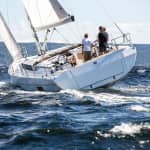
An abandoned ship
What had happened to her? Captain Morehouse sent several signals to the sailing ship, but received no reply. Strangely, there was no one to be seen on deck. Curious and worried, the captain of the freighter decided to launch a dinghy and sent two of his men (sailors Deveau and Wright) on board the "Mary Celeste". It didn't take them long to realise that there wasn't a soul on board. The ship was deserted, from the cabin to the bunks to the crew's quarters.
Damage, but no catastrophe
Contrary to rumour, no abandoned cat was found. From the outside, the sailing ship appeared to be in good condition. However, the sails were damaged and partially unfurled, indicating that the brig had sailed recently. The rigging was damaged and ropes were hanging down on both sides of the ship. The only lifeboat was missing.
A look into the load compartment
To make sure there wasn't a body lying somewhere, the two men ventured into the hold. There were several hundred barrels there. It was a cargo of alcohol that the "Mary Celeste" was to transport to Europe. There were also at least six months' worth of supplies. One of the barrels was broken open and two of the hatches were damaged. The water was about a metre high in the hold, but given the size of the ship, such damage was not dramatic. An improvised measuring stick was also found on deck, which had been used to measure the water level in the hold.
Tidiness in the cabins, missing instruments
What the sailors of the "Dei Gratia" found inside the "Mary Celeste" puzzled them. The cabins were neat and tidy. There were several personal items in the captain's cabin, including a sabre in its scabbard and - even more astonishing - a rosewood piano. The compass and other navigational instruments, on the other hand, were either broken or missing. In the logbook found on site, the last entry was dated 25 November, eight o'clock, so he was nine days old.
At this time, the "Mary Celeste" was about 40 nautical miles (74 kilometres) southwest of the area where it had been discovered by the "Dei Gratia". The rest of the ship's documents could not be found.
No trace of an emergency
No water had penetrated the cabins, they were undamaged, and everything seemed to be in order in the crew room too. The kitchen, which also contained plenty of supplies, was tidy. The crockery was in place, but contrary to many later reports, no meal had been served here, nor was one in preparation. There were no teacups on the breakfast table, the cooker was not hot and there was not a single pot on it.
The decision to salvage
Back on the "Dei Gratia", the sailor Deveau reported to Captain Morehouse. In his opinion, there were no signs of a sudden event (fire, crime) that would have triggered a hasty abandonment of the ship. This made the matter all the more puzzling. What had happened to cause the crew of the "Mary Celeste" to flee with the missing dinghy? And who was really in the dinghy?
After careful consideration, Captain Morehouse decided to return the wrecked sailing ship to Gibraltar, which was more than 1,000 kilometres away. He based his decision on a rule of maritime law which states that whoever salvages an abandoned ship can claim a substantial share of the total value of the ship and its cargo. So Captain Morehouse and four of his men retained command of the "Dei Gratia", while crew member Deveau and two other experienced seamen took over the "Mary Celeste". This was a difficult task for so few men, but the weather played into their hands. On 12 December 1872, the "Dei Gratia" docked in Gibraltar, followed by the "Mary Celeste", which did not arrive until a day later due to fog. Everyone was relieved to have arrived safely. The maritime court then confiscated the abandoned ship.
Where does the "Mary Celeste" come from?
From the launch as "Amazon"
When the press learnt about this case, it began to take a keen interest in the mysterious ship and its crew. Firstly, she realised that the "Mary Celeste" already had an eventful history behind her. This magnificent schooner brig (brigantine for North Americans) was launched on 18 May 1861 in Parrsboro, Nova Scotia (Canada). She was built from local timber, 30 metres long, seven metres wide and weighed almost 200 tonnes. The ship was originally named "Amazon" and was owned by nine people, including its builder Joshua Dewis and its first captain Robert McLellan. The latter fell ill on the schooner's first voyage and died. His successor John Nutting Parker was not spared either, as the "Amazon" collided with the equipment of a fishing boat off the coast of Maine and with another ship in the English Channel. In November 1861, she docked in the harbour of Marseille, where an unidentified artist immortalised her in a painting.
Stranding, sale, new name
In the following years, the "Amazon" cruised the Caribbean, the Atlantic and the Mediterranean without any significant incidents, but in October 1867, the brigantine, under the command of William Thompson, ran aground during a storm on the coast of the Canadian island of Cape Breton. A certain Alexander McBean from Glace Bay bought the wrecked ship and sold it to a local businessman, who in turn sold it to Richard W. Haines, a sailor from New York, in November 1868. Haines invested a large amount of money in repairing the ship and appointed himself captain. He was also the one who registered the restored ship in New York in December 1868 under the new name "Mary Celeste" under the American flag.
Remodelling and new owners
But Haines was not a good businessman. He was in debt and had to accept that the creditors confiscated his new ship and sold it to a New York consortium led by a certain James H. Winchester. Nothing is known about the activities of the "Mary Celeste" until 1872, but then the sailing ship underwent a comprehensive remodelling. It was lengthened, a second deck was added, the aft deck was enlarged and the weight was increased to over 280 tonnes.
Captain Benjamin Briggs
On 29 October 1872, a new partnership was formed between four people, including James H. Winchester (who owned six-twelfths of the shares in the ship) and the new captain Benjamin Briggs (four-twelfths). Benjamin Briggs was born in Massachusetts on 24 April 1835 and came from a seafaring family. His father was a captain, as were three of his brothers. As a practising Christian, he married his cousin Sarah Elizabeth Cobb in 1862 and they spent their honeymoon together on his schooner "Forest King" in the Mediterranean. The couple had two children, Arthur in 1865 and Sophia Matilda in 1870. In that year, Benjamin Briggs, a respected seaman, decided to retire and, together with his brother, bought shares in two ships. When he decided in favour of the "CMary Celeste", of which he became captain in October 1872, Benjamin Briggs had no idea that he had sealed his fate.
The last known journey
After remodelling the sailing ship, his first voyage was to take him to Genoa in Italy. Briggs took his time to put together his crew. He was to be accompanied by the second captain, Albert G. Richardson, with whom he had already sailed, his adjutant, the 25-year-old American of Danish origin Andrew Gilling, the newly married boatswain Edward William Head and four German sailors from the Frisian Islands, who were later mentioned as "peaceful people and first-class seamen". Shortly before his departure, Briggs wrote to his mother that he was very happy with his ship and his crew. Moreover, he was not travelling alone, as his wife Sarah Elizabeth and their two-year-old daughter Sophia Matilda were also to take part in the crossing, while little Arthur stayed with his grandmother. He would later become the only survivor of the family.
In court
The investigation in Gibraltar
Clear the stage for justice. On 17 December 1872, a trial began before the Chief Justice of Gibraltar, James Cochrane, in the presence of the Attorney General, Frederick Solly Flood. According to most observers, the latter was a man who aroused neither sympathy nor respect. It was said of him that he was a man "whose arrogance and swagger were inversely proportional to his IQ". Flood was one of those stubborn and inflexible people who, once they have made a decision, do not deviate from it.
Early suspicion of a crime
The first witness statements by Deveau and Wright convinced him that a crime had been committed on board the "Mary Celeste". This opinion was shared by the New York trade newspaper Shipping and Commercial List, which wrote on 21 December: "The conclusion is that a crime was committed somewhere and alcohol was the cause." According to the authorities, the crew indulged in a drinking binge and then murdered the captain and his family before fleeing in the dinghies.
Why the mutiny thesis was weak
However, it was quickly pointed out that Captain Briggs had been very popular with his men and that there had never been any authoritarian assaults on the sailing ship. Furthermore, and this is a strong argument, the alcohol in the barrels was undrinkable. Instead of intoxicating the crew, it would have mainly caused heartburn and even made them blind! And when sailors mutiny, they don't abandon ship, leaving their supplies and all their personal belongings behind.
Inspections and supposed traces
The authorities hoped to find out the truth through a thorough investigation of the "Mary Celeste". On 23 December, John Austin carried out a thorough investigation on Flood's orders with the help of diver Ricardo Portunato. In his report, Austin stated that the ship had apparently not been caught in a storm and that the hull showed no signs of collision or stranding. However, he pointed out notches above the waterline on both sides of the bow that could indicate foul play. He also noted possible traces of blood on Captain Briggs' sword. A short time later, Royal Navy officers carried out a second inspection, which confirmed Austin's observations. The notches on the bow had been made deliberately and there were possible traces of blood on the railing.
James Winchester is targeted
On 15 January, James Winchester, the co-owner of the "Mary Celeste", arrived from New York to reclaim the ship and its cargo. His negotiations with the Gibraltar authorities quickly took an unpleasant turn. Winchester first told them that he had not known that Briggs had been travelling with his wife and daughter. He then confirmed to them that he did not have the $15,000 bail to get the ship released. Winchester also noted that he himself was a potential suspect. Attorney General Flood suspected him of having hired a group of sailors to have Briggs and his officers murdered. Outraged, Winchester reaffirmed his complete trust in Briggs, an honest and reliable Protestant.
Flood's thesis and its decay
Flood stubbornly stuck to his position and confirmed in his report of 22 January 1873 to the Board of Trade in London that the crew had got drunk on the (undrinkable) alcohol from the cargo and killed Briggs, his family and his officers. The mutineers then slashed the bow to deceive investigators and fake a collision at sea. Flood also attacked Captain Morehouse and his men, accusing them of lying about the location of the Mary Celeste and falsifying the logbook. For him, it was impossible that the sailing ship could have sailed so far without a crew.
Flood's hypothesis of a mutiny was quickly refuted by two findings. Firstly, the reddish marks on the railing and on the captain's sabre were analysed: It was not blood, but rust. As for the notches in the hull, Captain Shufeldt of the US Navy proved at the request of the American consul Howard Sprague that these were marks left in the ship's wood by the seawater. Naturally, Flood was careful not to publicise these conclusions and, in the absence of a sufficient explanation, the hypothesis of foul play was maintained.
The low salvage premium
The question of the reward for Morehouse and his crew, who had brought back the "Mary Celeste", remained to be clarified. On 8 April 1873, Chief Justice James Cochrane ruled that the salvage crew should receive around £1,700 (170,000 euros today), which corresponded to a fifth of the total value of the sailing ship and its cargo. This judgement was generally considered to be very harsh in view of the risks involved in bringing the "Mary Celeste" to Gibraltar.
Some experts were of the opinion that the reward should have been two to three times as high. As if that were not enough, Cochrane's conclusions implied without any evidence that a crime had been committed, leaving Morehouse and his sailors, in the words of historian Brian Hicks, "forever suspect in the court of public opinion".
The hypotheses
Many theories, no solution
This case of a ghost ship has perhaps provoked the most attempts at explanation in maritime history. Investigators tried to reconstruct the events based on the clues they found: partially set sails, a dismantled bilge pump, shipboard documents and a single missing dinghy. Almost everyone wanted to put forward their own version, convinced that they knew the ultimate truth, but none of the theories were conclusive.
A crime?
This hypothesis was never abandoned, although there was no evidence pointing to the murder of Briggs and his officers. The involvement of the co-owner Winchester was also never proven, just as the version that the "Dei Gratia" was waiting for the "Mary Celeste" to set a trap for her is not logical. Furthermore, it is inconceivable that Briggs and Morehouse, assuming they knew each other, planned a fraud together, as Briggs would have made a loss by handing over a rescue premium to his friend. And what was to become of Briggs and his family? In 1925, historian John Gilbert Lockhart theorised that Briggs, driven by religious rage, may have murdered all the occupants of the ship before committing suicide. However, Lockhart, who had met Briggs' descendants, later abandoned his theory.
An attack by pirates or sharks?
It is true that Rif Berber pirates were active along the Moroccan coast in the 1870s. But would they really have ventured so far out to sea, and why didn't they plunder the "Mary Celeste", which still contained valuable personal belongings? Even the attack by sharks, which was at least possible, was not supported by any evidence and does not allow for a scenario for the complete disappearance of the crew.
A natural phenomenon?
By asking why Briggs and his crew could have abandoned a ship in good condition and with supplies on board, authors such as Paul Begg suggest that Briggs may have been mistaken in his assessment of the situation. Deceived by a pump failure, he would have believed that the ship had sprung a leak and everyone would have boarded a dinghy for a voyage of no return. A large wave or volume of water could explain the flooding of the cabins and the damage to the sails and rigging. An iceberg can be ruled out as this is unlikely so far south and would have been sighted by other ships, as can the theory of an imminent stranding. If the "Mary Celeste" had run aground in a calm and drifted onto a reef off the island of Santa Maria, all sails would have been hoisted to take advantage of even the slightest breeze. However, most of the ghost ship's sails were furled.
Leaked gas?
This is one of the most plausible hypotheses. Flammable vapours from the cargo (especially industrial alcohol) could have escaped from the barrels on board. When the leak was discovered, everyone on board could have hastily left the ship for fear of an imminent explosion. This would explain why the hatches were open to ventilate the hold. In its issue of 24 January 1886, the New York World reported on the explosion of a ship carrying a cargo of alcohol. On 9 February 1913, the same newspaper posed the question of whether flammable vapours could have escaped from the low-grade barrels loaded on the "Mary Celeste". Oliver Cobb, a cousin of Captain Briggs, even claimed that Briggs may have been so frightened under such circumstances (rumbling in the hold, smell of gas and danger of explosion) that he decided to abandon ship. How then can it be explained that no damage was found to indicate such an explosion?
The 2006 experiment
The answer to this may be found in an experiment carried out by Andrea Sella from University College London for the Channel 5 television station in 2006. He had a replica of the "Mary Celeste" built and triggered an explosion with butane. This produced a fireball, but contrary to all expectations, no damage, just a shock wave, without soot or burns. One can imagine that everyone took temporary refuge from danger in the dinghy and the ropes that attached it to the "Mary Celeste" then snapped, plunging Briggs, his men and his passengers to a terrible fate. But is that plausible? What is the point of tying up to a ship that is believed to be on the verge of sinking or exploding?
What has become of the "Mary Celeste"?
Release and continuation of journey
The tragic fate of the American sailing ship did not end in Gibraltar. As Flood had no proof of his suspicions, he had to release the "Mary Celeste" on 25 February 1873. Two weeks later, she left Gibraltar under the command of Captain George Blatchford to deliver her cargo in Genoa. On 26 June she returned to New York, where she arrived on 19 September. In the meantime, the events in Gibraltar were widely reported in the newspapers, and the "Mary Celeste" now had the unenviable reputation of being a "cursed ship". The sailing ship rotted in the harbour. In February 1874, the consortium of owners sold her to a group of businessmen from New York. They did not make a good deal, as the "Mary Celeste" subsequently cruised mainly in the Indian Ocean without really being profitable. As if to confirm her morbid aura, the brig regularly made the headlines. In February 1879, she docked on the island of St Helena, where her captain Edgar Tuthill died. He was the third captain of the "Mary Celeste" to die prematurely between 1874 and 1880.
The end in Haiti
The sailing ship continued its journey for five years, which was characterised by dramatic incidents such as fires and near-shipwrecks. Haunted by misfortune, the "Mary Celeste" finally ran aground on 5 January 1885 not far from Port-au-Prince in Haiti and sank.
Insurance fraud and crash
Her last captain, Gilman C. Parker, deliberately ran the ship into a rocky bank (the Rochelois Bank) in order to collect an insurance premium. However, his fraud was quickly exposed. Together with his accomplices, some shipowners from Boston, he was tried and convicted of insurance fraud in the course of 1885. With his reputation ruined, Parker died in poverty three months later. One of his co-defendants went insane, another committed suicide. Paul Begg wrote:
If the court of men could not punish these men [...] the curse that had been on the ship since the death of her first captain, Robert McLellan, on his first voyage, could wreak its terrible vengeance over the ship's watery grave."
The birth of a myth
How the press inflated the legend
This final episode ended the seafaring career of the "Mary Celeste", but not the legend that surrounded the mysterious ship from then on. Over the years, it became a subject that fired people's imaginations, spawned numerous theories and inspired countless articles, essays, novels, radio programmes, films and endless debates. Unsurprisingly, the press played an important role in the creation and spread of this legend. It first reported extensively on the event and then regularly published lurid articles, often adding invented details and speculating on extravagant scenarios to satisfy readers' hunger for exciting stories. As early as June 1883, the Los Angeles Times reported on the story of the "Mary Celeste" with fictitious details:
All the sails were set, the rudder was firmly lashed, no rope was out of place [...] The fire was burning in the galley. Dinner was ready, untouched and barely cooled [...] The logbook was completely filled out except for an hour before it was discovered."
20 years later, in 1906, the November issue of the Overland Monthly and Out West Magazine claimed that the "Mary Celeste" had been found drifting near the Cape Verde Islands, more than 2,500 kilometres south of where it was actually found. There was also talk of chickens living on board, and Briggs became the ship's chief mate.
Giant squid and other fantasies
In its 17 September 1904 issue, the Chamber's Journal hypothesised that a giant squid could have caught all the sailors of the Mary Celeste one by one. Although it is known that such creatures, up to 15 metres long, can attack ships, marine wildlife experts immediately pointed out that it was absurd to imagine that a giant squid could devour all the sailors and even the navigational instruments.
The alleged survivor
In 1913, the Strand Magazine seemed to spread sensational news with the report of an alleged survivor of the "Mary Celeste": The man named Abel Fosdyck was said to have been the steward of the doomed sailing ship. A swimming competition had been organised on the ship, and the makeshift platform on which the crew were standing had fallen into the water, causing them to drown or be attacked by sharks. Only Fosdyck survived. The story, no doubt written by a journalist unfamiliar with the vocabulary of seafaring, was full of errors: Briggs becomes Griggs, Morehouse becomes Boyce, Briggs' daughter is five years older and the crew numbers 13 ...
Treasure story and new life in Spain
In 1924, the Daily Express published the story of a retired captain. He is said to have received information from the former bosun of the "Mary Celeste" (although no member of the crew held this position). According to his statement, Briggs and his crew discovered an abandoned steamship on which they captured £3,500. After dividing up the treasure, they are said to have left the "Mary Celeste" and travelled to Spain in the steamship's dinghies to start a new life there. This imaginative explanation also enthralled readers for a while.
From the enigma to the paranormal
However, as no explanation could adequately solve the mystery, people also turned to the paranormal. There are countless publications that portray the story of the "Mary Celeste" as an esoteric experiment linked to Atlantis, aliens and even the Bermuda Triangle, although this is located in a completely different part of the Atlantic. In the decades that followed, while journalists raced to revive public interest in this maritime mystery, some writers followed suit. The most famous of these is the well-known novelist Sir Arthur Conan Doyle, the creator of Sherlock Holmes.
Arthur Conan Doyle and his version
As a young 25-year-old naval surgeon, Doyle anonymously published a short story entitled "J. Habakuk Jephson's Statement" in Cornhill Magazine in January 1884. In it, the captain of the "Mary Celeste" becomes J. W. Tibbs, the crossing takes place between Boston and Lisbon in 1873 and the ship is carrying passengers, including the famous Jephson, who narrates the story. Sir Arthur Conan Doyle imagined that one of the sailors (Septimus Goring), a fanatic driven by hatred of white people, persuades the crew members to murder Tibbs and set sail for the coast of West Africa. Only Jephson is spared because of his "magical charm". For the author, of course, this is a fictional text, but the American consul in Gibraltar, Howard Sprague, nevertheless launches an investigation to find out whether this story contains a spark of truth.
Has the mystery been solved?
Laurence J. Keating's book
In 1929, almost 60 years after the events, a book was published claiming to hold the key to the mystery. It was written by Irish journalist Laurence J. Keating, who had allegedly carried out a thorough investigation and had even found a survivor, the cook named Pemberton. In his book "Le Voilier 'Mary Celeste`'. Révélations définitives sur le plus grand mystère de l'Atlantique" (The Sailing Ship "Mary Celeste". Final revelations about the greatest mystery of the Atlantic) Keating tells his version of events.
The story of the surviving chef
In September 1872, the "Mary Celeste" was moored in New York harbour and was to transport a cargo of barrels to Genoa. Captain Briggs hired several seamen, including Lieutenant Hullock and the cook Pemberton. As he knew the captain of the three-master "Dei Gratia" and the cargo exceeded the capacity of the "Mary Celeste", the two men agreed that the "Dei Gratia" should take the rest of the cargo into her hold.
Readers of the story were puzzled: Briggs and Morehouse were working together? However, this was never mentioned during the trials. According to Keating, Briggs made the mistake of taking on board a couple of hard-drinking sailors, one of whom was known for his quick temper, and his wife with her piano (a harmonium). All the ingredients for an explosive cocktail in the middle of the ocean were there!
Murder, storm and fake rescue
And then tragedy struck: several fights resulted in various murders. During a storm, the captain's wife was killed by her own harmonium. Briggs, beside himself with grief, is said to have thrown himself into the water and taken his own life. The "Mary Celeste" was almost lost, with three sailors and the cook on board, who reported on the events. For the captain of the "Dei Gratia", who found the "Mary Celeste" in this condition, this was a stroke of luck. But in order to get money, his intervention had to look like a rescue operation. So he drew up a scenario in which he took the surviving sailors of the Mary Celeste on board and placed his own men on the abandoned ship. He told Pemberton and the three other sailors to keep quiet or they would be reported when they arrived ashore. Reported as passengers, the survivors disappeared in all directions after their arrival in Gibraltar. English-born Pemberton returned to his home country. Morehouse secured the complicity of his sailors by sharing the bounty with them, so that no contradictory statements contradicted his account to the authorities.
Why the theory fell apart
Even though the mystery seemed to be solved for Keating, many readers raised objections and pointed out inconsistencies in his version. One of these caused a lot of discussion ten years later when the famous piano belonging to the captain's wife was found in a document from the family estate, which had allegedly been on board the "Mary Celeste". In retrospect, Laurence J. Keating's book lost all credibility and today only offers a romanticised version of a still unsolved mystery.
No definitive answer to date
Recently, there has been no new theory that could satisfactorily explain the disappearance of the crew of the "Mary Celeste". Researchers and historians continue to investigate the few available details about this truly unsolved case at sea.
The book


Lars Bolle
Chief Editor Digital
