


YACHT: What were your expectations of today's consultation and were they met?
As I am working with the team from MEKUN having discussed this topic several times before, I knew what was coming and didn't really have any great expectations. But I have to say that new topics were presented today with more depth and more transparency than in previous meetings.
What exactly do you mean by that?
For example, we discussed the topic of navigation regulations once again. The experiences with the Wadden Sea National Park and its new navigation regulations were discussed, which was very interesting. We also exchanged views on the instruments that already exist for the protection of the Baltic Sea, such as the FFH areas and Natura 2000 areas.
And what exactly is more transparent than before?
The basis of argumentation on which this national park stands is slowly becoming a little clearer for us. But it's not really transparent yet. If someone were to ask me today: "As a sailor, are you in favour or against?", I would have to say that I can only be against at the moment because I don't know what the national park will mean for me in concrete terms. That's why I said to one of the questions today that I wouldn't answer it. Because it consisted of three subjunctives and several undefined legal terms. The whole project is not tangible for us. It is not at all clear what the national park will mean for sailors.

What are your experiences with the Schleswig-Holstein Wadden Sea National Park?
You can clearly see that things have got worse and worse for sailors since the national park was established. At first we were still allowed to sail on the tideways, we were allowed to fall dry, but today we are not even allowed to sail 100 metres into the mudflats, and to anchor we have to drop the anchor on the edge of the fairway, so to speak. But that's the end of anchoring, because you'd end up swinging into the fairway. That's the experience we've had.
Has anything been said about possible traffic regulations?
The decisions on this would be made in Berlin. For us, the national park is therefore a black box. And that's why I find it difficult to agree.
What was said about possible restrictions on use?
There is a lack of clarity about the terminology. We don't even know what utilisation means at the moment. We know that we are not allowed to put anything in or take anything out. But do I already contribute something when I switch on the engine? In other words, my exhaust gas? Or take the dredging of harbour approaches. This should remain permitted because the infrastructure on the coastline will not be part of the national park. But what about the dredged material? Are we still allowed to dump it? And if so, where? And who bears any additional costs that may arise? If five nautical miles have to be travelled now and 30 later, the costs will be immense. These are fears that harbour operators understandably have.
How do you currently assess the possible outcome of the project?
I don't know. But I think it's more important that we sailors don't look like we're preventing environmental protection measures. No water sports enthusiast wants the Baltic Sea to suffer or even deliberately harms it. Nobody does that. But I would like to know whether there is an alternative scenario and, if so, what it looks like. Instead, we have started off in one direction without examining other options.
You mean in the direction of the national park ...
... is also a cool label. But if we were to approach it objectively, we would first have to ask where we stand, what we have and what we can do on the basis of the existing instruments to protect the Baltic Sea more intensively. And if it is then technically established that it is not enough, then I have to say, okay, what is the alternative? And if that is the national park, then that is technically justified. But we have asked these questions up and down the country and they have not been answered.
What are the other, non-technical arguments?
I have heard, for example, that more attention is paid in Berlin if munitions are located in a national park and not in a normal nature reserve. I have also heard that it is easier to obtain funding if you have a national park. And of course there would also be a national park administration, which would be staffed and funded. But the money would of course come from the state, from the same pot that now finances other environmental protection measures.
What were the hottest questions in the workshop, were all water sports enthusiasts always of the same opinion?
We already have different interests. Everything that surfs, kitesurfs, wingfoils and SUPs is naturally closer to the beach than us sailors, and they are worried about their spots and their accessibility. We sailors are worried about our infrastructure and navigation regulations. Is it still possible to motor through, what about anchoring? And of course we see the big sporting events and popular sport, including every Wednesday evening regatta. On the Flensburg Fjord, we have 14 regatta tonnes laid out for this, all of which are very close to shore. I see Opti sailing, we have clubs that start from the beach. The catamaran sailors on the Holnis peninsula or in Strande are all afraid that they will no longer be able to practise their sport.
Why was the whole of the Bay of Lübeck excluded from the potential area? It is, for example, an area with an above-average number of motorboats, including very large ones. It would be easy to understand if the area were placed under greater protection than before for environmental reasons ...
... I don't know, and I don't want to make any assumptions. You could also ask yourself how the planned national park relates to the major construction projects. On Lolland, Europe's largest concrete factory is currently being built right on the water, the tunnels for the Fehmarnbelt link are being built and the Danes intend to leave the factory standing so that it can be used for other infrastructure projects: a link from Kalundborg via Samsø to Aarhus. A combination of tunnels and bridges. The Danes are also very strong in wind energy and want to use the factory to cast the concrete foundations for new wind turbines, which will then be installed in the Baltic Sea. And you have to ask yourself how this relates to the fact that we are protecting 0.6 per cent of the Baltic Sea coastline with the national park. If Denmark builds such a factory next door, for which the neighbouring waters are used as infrastructure for the ships it needs. Well, of course you could say, now more than ever ...
... it is argued that we all have to do our part ...
... yes, today it was said that we are leading the way. As a role model for other countries. For reasons of the biodiversity strategy. To do this, we have to place a certain proportion, I think around 30 %, under protection. We have already done this, if I have understood correctly. And the other neighbouring countries have not. But we are leading the way. It is also true that we are protecting the Baltic Sea, but the means must also be appropriate. And wouldn't it be much more effective to talk to the other neighbours in order to set up a protective net, so to speak? There are already owners who moor their ships in the Mediterranean and commute there by plane. That is the opposite effect of the desired environmental protection.
The topic is immensely important for sailors on the German Baltic coast. How well do you feel supported in your work?
We are very well positioned. And I can only promote membership of a DSV club. We have full-time employees like Michael Stoldt who deal with such issues as part of their job. And the same applies to the state sports association, with which we also work very closely. There are also good experts there who deal with this topic. Added to this is the commitment of the district sailing associations and the large clubs, so we are all pulling in the same direction. And it's good that we now also have the DOSB on board, because it's also about competitive sport on the international stage, I'm thinking of World Sailing, for example, which organises its major competitions here. And if Schleswig-Holstein ever wants to host the Olympics, it will only happen if we have a suitable venue.

More about the Baltic Sea National Park:
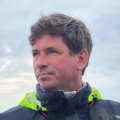
Lasse Johannsen
Deputy Editor in Chief YACHT