


CG30 Vento: New offshore racer for two-handed and full crew from Cossutti-Ganz
Fridtjof Gunkel
· 20.02.2026


The CG30 Vento is the result of a collaboration between Cossutti-Ganz Yacht Design and Northern Light Composites. The shipyard is based in Monfalcone/Italy and specialises in technically sophisticated cruiser-racers. Together with Cantiere del Pardo, NLComp has already built their Daysailer Grand Soleil Blue realised. The new model is aimed at offshore regattas with a two-handed crew and short trips with a full crew. The design allows easy transport on the trailer thanks to the removable keel and rudder.
Compact dimensions
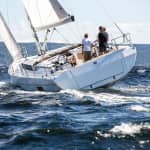
The hull measures 9.15 metres in length overall with a width of three metres. The displacement is 2,950 kilograms, of which 1,350 kilograms is for ballast. The draught is 1.96 metres. The focus is on high average speeds in light and variable winds. Cossutti/Ganz have dispensed with extreme hull shapes.
The shipyard builds the hull and deck in sandwich construction. Unidirectional and biaxial glass fibre fabrics are used over PVC and PET cores. The lamination is carried out using a vacuum process in negative moulds with vinyl ester resin. Internal structures are made of glass fibre reinforced plastic, CNC-milled and laminated to the fuselage. Plywood bulkheads, also CNC-milled, are glued and laminated to the hull and deck. The front bulkhead fulfils a collision bulkhead function.
Removable keel
The keel weighs 1,350 kilograms and consists of a high-strength steel fin with a lead bomb. GRP panelling completely encloses the construction. A cassette system enables quick assembly and disassembly of the keel. This solution facilitates trailer transport. The boat carries a single composite rudder on the transom as standard. A twin rudder configuration with swivelling rudder blades is available as an option.
Cockpit suitable for offshore use
The deck of the Cossutti Ganz design largely uses straight panels, which reduces moulding costs. Two long, moulded coamings protect the large cockpit from overflowing water. At the front, a large hatch provides access to the interior and enables quick recovery manoeuvres. The liferaft locker is located in the cockpit floor. The companionway is accessed via a classic sliding hatch with vertical sliding boards.
The deck layout allows efficient operation in solo or two-handed mode. At the same time, it offers sufficient working space for a full regatta crew. The equipment includes a carbon tiller, two primary winches in the cockpit and two further winches on the coachroof. All sheets run aft from the mast base and are accessible from the cockpit. A bench with ten sheet cleats sits in the centre of the coachroof. The boat is fitted with a 3D jib track system.
Potent rig

The 9/10 forestay rig carries a deck-set mast with two swept spreaders. The sail area upwind is 57 square metres, downwind 131 square metres. The mast and boom are made of aluminium as standard; a carbon boom or a complete carbon rig are available as options. The standing rigging is made of Dyform stainless steel wire, with rod or composite shrouds available as an option.
Owners can choose between Fathead large with double backstay or Normal large with long masthead boom and single backstay. The longitudinal mast position is close to the centre of the hull. The gennaker and code zero are run between the masthead and a retractable carbon bowsprit with a rectangular profile. The bowsprit disappears flush into the deck.
Naked interior
The interior follows the deck philosophy: simple, light, practical. There are two structural low berths aft and two fixed upper berths amidships. A longitudinal bench sits over the keel opposite the navigation area with chart plotter. An optional module converts the bench into a folding table. There are two fixed seats aft, separated from the centre area by two furniture modules with galley and refrigerator.
The foredeck remains open. The toilet area can be separated by an optional movable bulkhead. The equipment includes a refrigerator, sink and gimbal-mounted Jetboil cooker for multi-day offshore operations. Two flexible 55-litre tanks hold fresh water and black water.
Optimisable measurement by Cossutti-Ganz
The design team contributed its extensive experience with ORC and IRC optimisation to the development. Every aspect has been scrutinised for rating impact and compared with key competitors. The boat shows sufficient rigidity under sail for offshore racing, typically with two people. Stability remains moderate when much of the righting moment is generated by riding out the full crew. The projected racing values according to ORC: With full crew: 556 s/m, two-handed mode: 563 s/m.
Availability and distribution
Northern Light Composites builds the boat in Monfalcone. Marketing and sales will be handled directly by the shipyard in cooperation with selected specialist dealers. The first unit will be delivered in autumn 2026. Prices are not yet available.
Technical data
- Overall length: 9.15 metres
- Width: 3.00 metres
- Draught: 1.96 metres
- Displacement: 2,950 kilograms
- Ballast: 1,350 kilograms
- Keel weight: 1,350 kilograms
- Sail area downwind: 56.6 square metres
- Sail area downwind: 131 square metres
- Rig: 9/10 forestay, deck-supported
- Salinge: two, arrowed
- Mast/boom: Aluminium as standard, carbon optional
- Standing rigging: Dyform stainless steel wire, optional rod or composite
- Hull construction: GRP sandwich with PVC/PET core
- Laminating process: Vacuum, vinyl ester resin
- Keel fin: High-strength steel
- Keel bomb: Lead
- Rudder: Centre rudder on transom, optional twin rudder with lifting blades
- Engine: 11 hp diesel with Saildrive
- Propeller: Two-blade folding propeller
- Fuel tank: 40 litres
- Fresh water tank: 55 litres (flexible)
- Black water tank: 55 litres (flexible)
- On-board voltage: 12 volts
- Winches: four (two cockpit, two coachroof)
- Sheet clamps: ten

Fridtjof Gunkel
Deputy Chief Editor YACHT
