


Maps and literature at delius-klasing.de:
- DK Recreational craft chart set 7Adriatic 1 "Venice - Rijeka - Sibenik - Drvenik V.", ISBN: 978-3-667-13019-8 64,90 Euro.
- DK Recreational Craft Chart Set 8: Adriatic Sea 2 "Zirje - Split - Dubrovnik - Bar", ISBN: 978-3-667-13020-4, 64.90 euros.
- Bodo Müller/Jürgen Strassburger: "Küstenhandbuch Kroatien und Slowenien", ISBN: 978-3-667-13007-5, 39,90 Euro.
- Bodo Müller/Jürgen Strassburger: "Küstenhandbuch Kroatien und Montenegro", ISBN: 978-3-667-12593-4, 39,90 Euro. | Photos: Bodo Müller
The Adriatic remains a top destination for charter crews - but an expensive one. This is because the costs for moorings, national parks and restaurants have been rising for years. What else is going on in the region.
The east coast of the Adriatic was by far the most popular destination for a charter cruise or a holiday trip on your own keel during this year's boot in Düsseldorf. This is nothing new. And yet one thing was scrutinised more critically this year: the exploding prices. Since the introduction of the euro in 2023, Croatia has been experiencing a wave of inflation that is hitting not only locals but also sailors particularly hard.
Expensive moorings, national parks and restaurants
To be clear: It is not the charter prices that make boat tourism on the Adriatic more expensive. On the contrary, nowhere else in the Mediterranean can you charter as cheaply as here. It is the additional costs that make the trip expensive, starting with the mooring fees in harbours and buoy fields, through national park fees to the bills in a konoba.
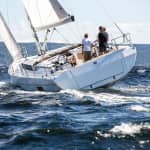
According to research by the Croatian magazine "More", the fees for a berth currently range between 5 and 30 euros per metre of boat length. For a 40-foot charter boat, you can therefore pay up to 360 euros for a berth per night. By way of comparison, the same boat would cost 22.50 euros per night in the Passat harbour in Travemünde. Prices for buoy moorings in Croatia are now up to seven euros per metre. For our example boat, that would be 84 euros for a night at the buoy without service. For some buoy fields, a reservation fee of 30 euros is added on top.
National parks are at the forefront of the cost explosion. In the N. P. Kornati, you paid a whopping 190 euros per night for a twelve-metre boat in 2025. Prices in the konobas have gone completely out of control. In 2025, you were already paying over a hundred euros per kilo for a 1st class fish. Quite a few charter crews are therefore rightly asking themselves: Can we still afford the Adriatic?
Growing charter offer ensures low prices
In 2024, there was already a slump in bookings of around five per cent. However, according to the Croatian National Tourist Board, the country has recovered from this dip. An increase of one per cent in charter tourism was even reported for 2025. This is in line with the official statistics on the renewed increase in the charter fleet. As of February 2026, the charter fleet had risen to 4,718 boats and yachts. That is world class! The number of charter companies has also risen from 88 (2025) to currently 100. The large supply means that charter prices between Istria and southern Dalmatia are the lowest in the entire Mediterranean region.
Saving tips for your Adriatic cruise
So how can you stay loyal to the Adriatic even on a small budget? Even last season, it was noticeable that charter crews were stocking up as much as possible in the harbour of departure in order to be as self-sufficient as possible while underway. Many anchor in bays that are not serviced. And clever boaters who want to visit the N. P. Kornati register in advance at a konoba and go alongside the jetty of the restaurant to save on the parking fee. Since 2024, charter companies have reported that the gas cylinders, which used to last a whole season, now have to be replaced with every crew change. So obviously more cooking is being done on board.
Outlook: New players on the Adriatic soon?
The fact that only a few new marinas are currently being built may also have something to do with the more complex authorisation procedures since joining the EU. However, the cards could soon be reshuffled on the east coast of the Adriatic. This is because the concession agreements for 20 of the 22 ACI marinas end on 31 December 2030. In an EU country, concessions can no longer be automatically awarded to a state-owned company; they have to be put out to tender. And there are interested parties who have taken a look at the marinas in attractive locations. Malicious tongues claim that the repair and renovation backlog that is evident in some ACI marinas is linked to the imminent expiry of the concessions.
Here we present the current projects on the Adriatic:
Maps and literature at delius-klasing.de:
- DK Sport Boat Chart Set 7: Adriatic 1 "Venice - Rijeka - Sibenik - Drvenik V.", ISBN: 978-3-667-13019-8 64,90 Euro.
DK Recreational Craft Chart Set 8: Adriatic Sea 2Zirje - Split - Dubrovnik - Bar", ISBN: 978-3-667-13020-4, 64.90 euros. - Bodo Müller/Jürgen Strassburger: "Küstenhandbuch Kroatien und Slowenien", ISBN: 978-3-667-13007-5, 39,90 Euro.
- Bodo Müller/Jürgen Strassburger: "Küstenhandbuch Kroatien und Montenegro", ISBN: 978-3-667-12593-4, 39,90 Euro.

Bodo Müller
Freier Autor
