


Torres is a skipper and Antarctic expert. He joined the Chilean navy at the age of 15 and served as a lighthouse keeper and radio operator on Cape Horn. After studying tourism in Punta Arenas, he began his career as a professional skipper and expedition leader. Today he lives in Germany and leads sailing and research projects with his company Polarwind Expeditions to the most remote regions of the world - especially around Tierra del Fuego, Cape Horn and the Antarctic.
Torres is currently on his second cruise following in Plüschow's footsteps. But why does the German naval officer and aviation pioneer inspire him so much that he has dedicated a project called "100th anniversary of Gunther Plüschow's arrival in Chile" to him? Silvia Kählert spoke to him about this and the challenges that the waters, fjords and glaciers hold for sailors. She is editor-in-chief of Chile's largest German-language weekly newspaper "Condor".
Silvia Kählert: Mr Torres, how did you become interested in the sailor, aviation pioneer and adventurer Gunther Plüschow?
Osvaldo E. Escobar Torres: My interest in Gunther Plüschow's expedition began in 1995 when I arrived in Patagonia and bought the first book about his journey. As a sailor and an in-depth connoisseur of the canals in southern Chile, this expedition has a particularly personal value for me.
The more I sailed in different parts of the world, the closer I got to the story of Plüschow - from his beginnings in Büsum, where he grew up, to his adventures in South America. This became particularly clear when I embarked on a circumnavigation with my family and sailed the same route from Europe to Patagonia - on a 15 metre yacht, just like the "Feuerland". We shared similar limitations, worries, joys and challenges - except that 90 years of history separated us.
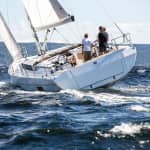
Today, it is almost unimaginable how such an expedition was organised 100 years ago. Their clothing, technical equipment, nautical charts, the design of the sailing boats and communication on board - all these aspects have developed enormously in both seafaring and aviation. Modern sailing, which I find quite "comfortable", hardly gives us any idea of what those adventurers really experienced back then. That's why I always remember this well-known nautical expression:
In the past, ships were made of wood and their crews were made of steel. Today, ships are made of steel - and their sailors are made of wood."
To what extent is the Patagonia region of particular interest to you as a sailor and for the project?
The Magallanes region is characterised by a series of historical events of great importance, from the discovery of the Strait of Magellan in 1520, to the arrival of Francis Drake in 1578, the discovery of Cape Horn in 1616 and the arrival of the "Goleta Ancud" in Magallanes in 1842, among many other maritime events of world historical relevance.
Gunther Plüschow's expedition on board the "Tierra del Fuego" was an extraordinary nautical achievement for its time. His overflights with the "Silver Condor", during which the peaks of Patagonia were photographed for the first time, also represented a milestone in the aerial exploration of the region.
What is the aim of the project?
The main aim of the project is to ensure that one of the chapters of our shared maritime history with Germany is not forgotten.
The surviving documentation and Plüschow's books enable us today to understand the enormous challenges that this expedition entailed in one of the most inhospitable, complex and demanding navigation regions in the world. The collected sources also form the basis for retracing and retracing some of the routes travelled by Plüschow - especially by sea on board the "Tierra del Fuego".
How did your collaboration with the Freundeskreis Gunther Plüschow and the Windjammer Freunde come about?
Our joint work with the Freundeskreis Gunther Plüschow began when I bought the book "Ikarus Gunther Plüschow. A Life on Three Continents" by the author Gerhard Ehlers in Ushuaia and subsequently made contact with the Circle of Friends. At our first meeting, we immediately recognised that we shared the same interests. This made it possible for us to build a beautiful friendship and to walk the path together of spreading a common history between the two nations - Chile and Germany.
I have been a member of the Windjammer Freunde in the city of Maintal since 2012. Our association currently maintains our clubhouse called Cabo de Hornos, where we organise all kinds of nautical activities and historical presentations.
We have also made free contributions in the Magallanes region, in particular with optimist dinghies for the children of the sailing school in Puerto Williams in the municipality of Cabo de Hornos. We have also carried out several projects in connection with the 400th anniversary of the discovery of Cape Horn.
How is Gunther Plüschow's expedition remembered and honoured in South America and Germany today?
Although Plüschow's story has its origins in Germany, it unfolds entirely from the perspective of seafaring and air expeditions in Chilean-Argentinian Patagonia. In Argentina, the expedition is still honoured today - with street names, a replica of Plüschow's plane and various commemorative events. Chile, on the other hand, has fallen somewhat behind in terms of this fascinating historical chapter, which began in Punta Arenas and was later continued in the Cape Horn region. It is precisely this project that aims to change this situation in Chile - with the aim of publicising and celebrating the 100th anniversary of this historic event in the Magallanes region.
In Germany, the situation is somewhat different: the name Gunther Plüschow is largely unknown today. Interestingly, however, between 1926 and 1930 - after the publication of his two books by Ullstein Verlag in Berlin - he was a household name throughout Germany. Back then, his name stood for courage, adventure and discovery. With our reports, documentary films and publications, we hope to bring this history back to life here in Germany.
What exactly should your current project look like?
The aim of the project itself is to further research the history of Gunther Plüschow in Chile - particularly in the Magallanes region. To this end, we will carry out extensive research in various regional archives and undertake several trips in this region with our sailing boat - just as Plüschow once did with his cutter "Tierra del Fuego".
A group of sailors from Germany, including our friend and Plüschow biographer Gerhard Ehlers, as well as various journalists from Chile and Argentina, correspondents from nautical magazines in Germany and Spain and photographers who will support us in the production of our forthcoming publications, are accompanying us for this project.
All these activities, which are already being carried out with the knowledge and support of the Chilean authorities, form the prelude to the subsequent coordination of the celebrations for the arrival of Gunther Plüschow in Patagonia in 2027.
