


Sailing in old age: The right equipment and conversion to extend your time on the water
Fabian Boerger
· 08.04.2026


The time comes with retirement. Many people then dream of a great sailing adventure, sailing round the Baltic or even crossing the Atlantic. There are no limits to the plans - but the body does. This is because the body plays along less and less with age.
From the age of 30, people lose muscle mass continuously. An extensive fitness programme can cushion this development, but it cannot stop it completely. According to various studies, the body loses three to eight per cent per decade. The result of muscle atrophy: strength decreases, mobility is increasingly restricted and the risk of falling increases considerably.
Other interesting articles:
The number of older people is increasing overall, as population forecasts from the Federal Statistical Office show - and the number of older sailors is also increasing. Senior citizens on board are gaining in importance.
So what can they do to maintain the joy of sailing despite dwindling strength? Wilfried Erdmann once had a pragmatic answer to this question. In an article in the "Hamburger Abendblatt" newspaper, he advised older sailors: "Prepare harbour manoeuvres well in advance so that nobody gets nervous. And if the forecast is favourable, put on your weather gear before setting sail. If it's more pleasant outside than forecast, you can take off your thick jacket and trousers again."
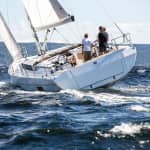
That's one approach. But not everyone is helped by good sailing gear. Instead, for many, the desire for a boat that fulfils these age-related requirements grows with age. One that is safer, more comfortable and, above all, more manageable. But what does it take?
Scientific studies on sailing in old age
Dr Wolf-Dieter Mell is one person who has worked intensively on this question. The retired graduate engineer with a doctorate in social sciences researched sailing in old age in the late noughties. Together with the Institute of Sports Science at Kiel University, he investigated what older sailors find difficult on board.
For his work, Wolf-Dieter Mell founded the Institute for Boat Tourism in Bonn, a private scientific research organisation, and cooperated with the then Federal Association of the Water Sports Industry - now VMWD (German Maritime Industry Association). He also headed the scientific research and advisory centre there for several years.
Today, almost 20 years later, these results are still important for two reasons. Firstly, unlike other analyses, they provide concrete measurement data from which precise recommendations for yacht builders can be derived. The data clearly identifies the sticking points and enables technical solutions that can be used to take targeted countermeasures. Secondly, Mell's studies on sailing in old age are largely unique. Since its publication in 2009, there have been no comparable studies on the stresses and strains experienced by sailors in old age - at least none that are known to those involved. Despite this unique selling point, Mell's research, which was once funded by the VMWD, was subsequently discontinued - also for financial reasons, according to enquiries. The sports science institute in Kiel, with which Mell co-operated, also stated that it did not pursue the topic any further.
How much strength fades with age
Mell's findings still largely stand alone today and therefore continue to provide guidance. Mell himself was in his 60s at the time of the research, shortly before retirement. That's when the focus turned to the changes that come with age, he says. "I thought it was really worth investigating. Especially between the ages of 60 and 80, the changes are really dramatic." Experiencing these changes first-hand awakened his spirit of research. In the study, he therefore investigated how much strength diminishes with age and what this means for sailing. In concrete terms: how long can an older sailor use how much strength to pull a mooring line or sheet tight?
The result: a 60-year-old has less power, both when a lot of strength is needed quickly and during longer efforts. If the exertion lasts longer than two minutes, older people can only call up around half as much strength as a 20 or 30-year-old.
The situation is similar with balance. Walking safely across the deck to work on the foredeck in wind and waves becomes increasingly difficult from the age of 60. However, athletic fitness plays a major role here, according to the study. It can equalise age to a large extent.
The reaction time slows down with age
However, the demands on board cannot be reduced to strength and balance alone. Mental abilities also play a role, for example when sailors have to keep an eye on several things at the same time. During mooring manoeuvres, for example, when mooring lines have to be laid over piles, while steering and slowing down at the same time. Or when navigating in challenging waters: In addition to the echo sounder, other sailors, commercial shipping and fairway buoys demand attention.
The study shows that both young and old can manage one activity without any problems, such as steering along the wind edge or navigating with a compass. However, the more activities are added in parallel, the clearer the differences become. Reaction times become increasingly slower with age.
Manoeuvres such as setting sail or manoeuvring in the harbour are particularly stressful. This is confirmed by long-term measurements of the heart rate of 42 test subjects. During these manoeuvres, the body worked particularly hard and the measured values were correspondingly high. The researchers also demonstrated a significantly increased stress potential. What's more, the greater the wind force, the greater the stress. This applies to both physical and mental exertion. The next step was to use these insights to develop technical approaches that would provide answers to the respective age restrictions.
Age-appropriate conversion of a Hanse 455
Hans-Peter Glück is one person who has accompanied this development right through to the real world. The retired Swiss dentist is now 70 years old. In 2018, he had his ideal idea of an age-appropriate yacht built in Greifswald. A Hanse 455, optimised with various smart solutions. Many of these are based directly on Mell's research. During the construction phase and afterwards, the two remained in close contact and optimised the systems together.
One of these solutions is the so-called Comfo Drive. It is designed to reduce the high stress levels during harbour manoeuvres, especially in crosswinds or currents. The centrepiece is a joystick concept with which the engines, i.e. the boat's diesel engine and bow and stern thrusters, can be controlled with just one hand.
"I'm a little surprised myself," he says, but he has had no problems with the control system so far. He has been testing the system on board his "Rubberduck" for seven years, which he transferred to the Mediterranean a year after it was built. He is still enthusiastic today. "What was developed there is really impressive," says Glück. Everyone he has let sail with the system has been impressed. It is user-friendly, whether in crosswinds or when sailing backwards or forwards into the harbour. "It's much easier when I can do everything with one hand."
Reduce effort, streamline systems
Glück emphasises that the system is redundant. So if the joystick system should ever fail, he can control the motors directly via the standard route. "That was very important to me, that I wouldn't have any problems should it ever fail."
The other adjustments have also proved successful, especially with a small crew on board. "You can clearly feel this in terms of sailing performance," says Glück. One example is the electrically infinitely adjustable traveller, which he also operates using a joystick and which is mounted on a powerful targa bracket aft. In the past, Glück often chartered, and on many ships the owners dispensed with travellers altogether. It was too complicated to operate, especially on larger boats. The joystick control solves the problem, giving back an important trim instrument.
Glück has installed an anchor washing system at the bow. Not so much because of body fatigue, but rather because of material fatigue. The chain is rinsed with fresh water before it goes into the chain locker. "This has proved its worth, the chain still looks pretty good." In addition, the system saves time-consuming retrieval of the chain. He uses grey water, which he also collects, as water.
Assistance in the harbour
A mobile intercom system on board is also helpful, a system that Glück observed in horse breeding and adapted for his boat. He has installed five intercom stations. The skipper controls the communication: he dials individual crew members directly and speaks to them while the others listen in. It's ideal for harbour manoeuvres when there's a bit more wind and the foreship man often doesn't understand what the skipper is saying. It works without shouting, with earplugs and a microphone.
However, there are also things that do not yet fully satisfy Glück. One example: the gangway at the stern of the boat. Here, the operability is not yet optimal, especially when the distance between the stern and the gangway is large. However, many other adaptations have proved successful, summarises Glück. There have even been attempts to commercialise the ideas. The system was presented twice at boot Düsseldorf, both the Comfo Drive and the stainless steel configuration. A German charter company installed the control system in one of its boats. Mell thought this would have an advertising effect. A company that built houseboats also utilised the concept.
However, the big hit did not materialise. "For some reason, it never caught on," says Mell. Nevertheless, he is convinced that the shipyards have taken note of the results of the study. Some suggestions can be found on modern yachts today: handrails, the angle of inclination of the steps or combined transverse thrusters. The third level, which makes the Comfo Drive special, has so far been ignored by the industry: the integration of the main drive. In addition to the transverse thrusters, it also combines forward and reverse movement in one system.
In addition, the timing was unfavourable for marketing the product, adds Hans-Peter Glück. Corona came in 2020. "Then the kick was missing. It became very difficult to make up for the lost years."
Move the age limit backwards
Nonetheless, after years of testing, both draw a thoroughly positive conclusion: the age-appropriate yacht project works for Hans-Peter Glück. Of course, these are individual solutions that vary from sailor to sailor. But they provide plenty of ideas for anyone looking for a safe, comfortable, long-distance and, above all, controllable boat.
Hans-Peter Glück summarises: The system makes the boat almost single-handed, even on larger yachts. This significantly increases safety on board, especially when physical strength declines with age. "I think the system allows the age limit to be pushed back quite a bit. I reckon you'll definitely gain about 15 years."
Transverse thruster against mooring stress


Narrow pit lanes and diminishing manoeuvrability quickly cause stress. A bow or even a stern thruster significantly lowers the pulse rate in such situations. At the touch of a button, the boat stays on track or turns into the box, regardless of the wind. This has an effect on the whole trip: Those who worry less about mooring will set off more often, gain practice and react more confidently. The good news is that transverse thrusters can be retrofitted. However, it quickly becomes expensive - shipyards easily charge between 1,500 and 2,000 euros for installation, including GRP and electrical work. Self-installation is possible, but requires some effort: You have to cut a hole in your own hull.
For those who want to go even further, systems such as the Comfo Drive or similar alternatives are interesting. They combine a diesel engine and bow and stern thruster via a joystick.
Cleverly organised sailing manoeuvres


The market also offers many solutions for sail handling. Smaller conversions such as lazy jacks and bags, where the sails are held between lines and stowed in a bag on the boom, are often sufficient. Furling sails are even easier to use. Furling jibs have long been standard; furling mainsails, whether furled in the mast or in the boom, are becoming increasingly popular. Modern versions with better materials and vertical or horizontal battens are hardly inferior to conventional sails. The advantage: nobody has to leave the cockpit. Electric winches make the work even easier. Instead of energy-sapping cranking, all you need to do is press a button. Electrification of the halyard winches is recommended. With the right pulleys, halyards, downhauls and outhauls can be guided into the cockpit. They can also be electrified retrospectively.
Safe on board and when going ashore


Moving around on board is also safer with slight adjustments. For example, grab handles in the right places help immensely. If the top railing wire is replaced with a solid railing tube, it provides a firm hold when going onto the foredeck. A bar on the sprayhood also increases safety, as do handrails below deck. It is also easier to get off the boat. Uncommon in the North and Baltic Seas, but standard in the Mediterranean: gangways make boarding much easier. They are available in various designs, even inflatable. If you moor at the stern, you can get on and off the boat easily. There are also solutions with the bow at the jetty: Rope ladders, bolted-on plates, lowerable bowsprits or foldable stainless steel constructions. Also helpful: a handle with a Velcro strap on the forestay.

Fabian Boerger
Editor News & Panorama
