


When the book "Segelfahrt ins Wunderland" was published in 1926, it was greeted with great enthusiasm in Germany. In it, the former naval officer Gunther Plüschow describes his voyage to Tierra del Fuego and the rounding of Cape Horn with the four-masted barque "Parma". For Plüschow, this was the fulfilment of a childhood dream and a further expression of his pronounced adventurous and pioneering spirit.
His vivid descriptions of the spectacular and windswept landscapes hit the nerve of the times. The book became a bestseller in a Germany that was experiencing a cultural and scientific heyday during the Roaring Twenties. Its success enabled the Munich-born author to set off again at the end of 1927 with his own expedition to the end of the world.
More interesting articles on historical topics:
- Shipwreck of two crews with different outcomes - team play on one side, cannibalism on the other
- Struggle for survival in the ice: The "Belgica" expedition - nightmare in the Antarctic night
- History: The creation of the original Optimist-Pram for soapbox races on the water
- Designer Plunder sailed across the Atlantic with "Sowitasgoht V" in 1923
- Archaeologist sails like the Vikings - and makes new discoveries
At this point, Plüschow can already look back on a breathtaking CV that has earned him hero status. A striking dragon tattoo on his left upper arm commemorates his two missions in Tsingtau in eastern China in the service of the Imperial Navy.
During the siege of the German colony by Japanese and British troops in the First World War, the young naval pilot undertook risky reconnaissance flights in a patched-up Rumpler Taube, which earned him the nickname "Aviator of Tsingtau". In 1914, shortly before the city was captured, Plüschow, equipped with important documents and German-Chinese papers, escaped with his aircraft and had to make an emergency landing 155 miles away.
Escape from Asia and from British captivity
A nine-month odyssey followed, which initially took him via Shanghai and San Francisco to New York. There he boarded an Italian steamer bound for Europe under a Swiss identity. During a stopover in Gibraltar, he was discovered and became a British prisoner of war, which led him through several stations to Donington Hall in the north of England.
There he managed to escape again and made his way to London, where he managed to smuggle himself on board a Dutch ship that crossed the English Channel and moored in neutral Vlissingen. He eventually returned to Germany as a celebrated war hero. To this day, he is considered the only prisoner of war to have managed to escape from the British Isles.
On his second trip to Tierra del Fuego, Plüschow wanted to explore and document the sparsely mapped glacier world at the southern tip of South America. He receives prestigious support for this: in addition to engine manufacturer Deutz and aircraft designer Ernst Heinkel, publisher Dr Karl Ullstein is also impressed by his ambitious plans, who is naturally banking on a new bestseller.
Plüschow wants to fly over Tierra del Fuego and Patagonia for the first time
A 52-foot sailing cutter is built especially for this expedition at the Krämer, Vagt & Beckmann shipyard in Büsum. The ketch-rigged ship is launched in October 1927 and christened the "Feuerland". Six weeks later, she leaves the German North Sea coast for the English Channel and the South Atlantic. The crew included 23-year-old Paul Christiansen, who would later act as captain, and an on-board dog named Schnauff. Another important member of the expedition, engineer Ernst Dreblow, travelled on a second ship, the freighter "Planet" from the Hamburg shipping company Laeisz. In his luggage: a Heinkel HD 24 named "Tsingtau", which will soon be nicknamed the "Silver Condor".
Plüschow wants to use this two-seater seaplane to fly over Tierra del Fuego and neighbouring Patagonia for the first time. The sailing cutter will serve as a floating base of operations, as there is still a lack of infrastructure in the impassable region.
At the end of July 1928, the "Tierra del Fuego" docked in Bahia, Brazil, where Plüschow travelled inland to visit the Botokuden - the indigenous people who wear wooden discs in their lips and ears. This stopover is probably at the behest of Ullstein Verlag, who are eagerly awaiting exotic stories. On 21 October 1928, the German expedition ship "Tierra del Fuego" finally reaches the Strait of Magellan and two days later Punta Arenas in Chile, where it is already awaited by Ernst Dreblow with the dismantled biplane "Tsingtau".
Homage to Plüschow
Osvaldo Torres, former lighthouse keeper of Cape Horn and experienced professional skipper in the region, has set himself the goal of retracing the route of the "Tierra del Fuego" through the fjords of Tierra del Fuego to commemorate Plüschow's pioneering work. The ambitious project should be completed in time for the 100th anniversary of the German explorer's arrival in Punta Arenas. However, in addition to the often merciless weather conditions with wind speeds of up to 90 knots, there is another difficulty to overcome, as Torres reports:
"There have been no logbook entries since the 'Feuerland' arrived, but there is extensive photographic material that we can use to reconstruct the route piece by piece and identify anchorages."
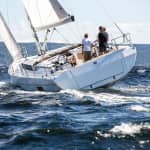
Like Caleta Olla in the glacier region of the Beagle Channel. At the beginning of February 2026, Torres' crew rediscovered the historic anchorage in the middle of the numerous side arms and islands. The iconic photo of the "Tierra del Fuego" and her crew in the rowed dinghy from back then is proudly recreated. Fittingly, the modern Jeanneau 50 DS, which is anchored in the same place, is also called "Tierra del Fuego".
"From a nautical point of view, this area is just as challenging as it was back then," explains Torres, "but today we have functional sailing gear, several heaters, sensible weather forecasts and Starlink, which makes life on board much more comfortable. And by the way, I've been sailing here for over 25 years, so I know my way around pretty well. For Plüschow and his team, on the other hand, it was all new territory. That deserves the utmost respect!"
Aerial survey work in the area of longing
After arriving in Punta Arenas, Plüschow and Dreblow immediately set about reassembling the aircraft. A steamship company makes its repair yard available for this purpose. On 3 December 1928, the Heinkel with the registration D-1313 is ready for take-off and both men enthusiastically set off on their first reconnaissance flight. They fly over Monte Darwin, the highest mountain in the Tierra del Fuego archipelago, and then along the Beagle Channel to Ushuaia. After the successful landing on the water, countless locals rush over to marvel at the first aircraft they have ever seen. The excitement almost drowns out the bundle of letters that the German aviation pioneer is about to hand over to an official - the first airmail to be delivered to this remote outpost of civilisation.
Back at the Strait of Magellan, the aviators are welcomed like heroes. In the months that followed, the two continued their exploratory flights and documented the landscapes with hundreds of photos and just as many metres of film. This resulted in the first aerial photographs of the Tierra del Fuego archipelago, which glaciologists still use today to document climate change on the basis of the shrinking glaciers. At the end of many days of aerial surveying work, the "Silver Condor" lands off the coast to await the arrival of the mother ship.
The "Feuerland" not only delivers fuel, supplies and spare parts, but also has a darkroom where the film material can be developed. There is also a Remington typewriter on board, on which Plüschow writes down his experiences. Cape Horn, the southernmost point of the American continent, is flown over as well as the Torres del Paine in Patagonia - Plüschow could fly around his dream destination forever.
Plüschow returns to Germany
However, in April 1929, Ullstein Verlag asked him to return to Germany to complete the next book. As his financial resources were also running low, he sold the "Feuerland" to a Scotsman. The ship is renamed "Penelope" and transports cattle between the Falkland Islands and the South American mainland over the next few years. She is later taken possession of by the Argentinian navy during the Falklands War.
Back home, Plüschow sees his wife and son again after twenty months. In the same year, his book "Silberkondor über Feuerland" (Silver Condor over Tierra del Fuego) is published and, like the documentary film shown in cinemas at the same time, is received with great acclaim. The book is also translated into Spanish to make it accessible to the South American population. But the wanderlust-driven adventurer is not content to rest in the bosom of his family.
Third expedition is not under a good star
Plüschow set off for South America again in the summer of 1930 - the success of the book and film had once again brought in enough money. He spends the first few months showing films in Argentina and Chile and obtaining new flight permits. The third expedition to the Chilean-Argentinean Patagonia is ill-fated from the start. When Gunther Plüschow and his partner Ernst Dreblow eagerly inspected the stored "Silver Condor" in November 1930, they were horrified to discover that their aircraft had been eaten away by rats. The wings, including the cross struts, were particularly badly affected and required extensive repairs.
Of course, the steadfast adventurers are not going to let this stop them. After long night shifts, they get the biplane back into flying condition just before Christmas. Due to difficulties with the Chilean bureaucracy and rumours of espionage, they move their base to Argentina.
The year begins with intensive filming, but fierce winds and a lack of spare parts make the flights increasingly difficult. On 26 January 1931, a violent storm forces the "Silberkondor" to make an emergency ditching on a small lake surrounded by high cliffs. The aircraft was badly damaged. With great difficulty, a makeshift repair in the icy water was carried out and, after several attempts, the aircraft was able to take off from the funnel-like prison.
Plüschow's death and legacy
It is the morning of 28 January, and with the euphoria of having supposedly cheated fate once again, the men set course for their base in El Calafate on Lago Argentino. Around midday, the Heinkel then crashes not far from its destination for unknown reasons. Both men were ejected from the aircraft and did not survive. The bodies of Plüschow and Dreblow are transferred to Germany and buried with full honours.
The crankshaft of the "Silberkondor" is kept in Argentina's National Aviation Museum, and there was also hope that the sailing cutter "Feuerland" could continue to exist as a cultural monument in the Flensburg museum shipyard. Unfortunately, it could no longer be saved and was scrapped in the summer of 2025.
Memories of the sailor, pilot and explorer Plüschow have largely faded over the years, both in Germany and on the other side of the world. But Osvaldo Torres wants to change that with his anniversary project. The new "Tierra del Fuego" is also anchoring for this purpose: to give lectures to the locals about the German pioneer and his influence on this unique region.
About Gunther Plüschow
- Born 8 February 1886 in Munich
- 1906-10 First assignment in Tsingtau on the SMS "Fürst Bismarck"
- 1914 second mission in Tsingtau, this time as a reconnaissance pilot
- 1914 Escape from Asia
- 1915 Escape from British captivity
- 1925 First South American expedition on board the "Parma"
- 1928 Second South American expedition with the "Tierra del Fuego"
- 1930 Third South American expedition without a ship
- Died 28 January 1931 in Argentina
Expeditions to Tierra del Fuego

Osvaldo Torres, Chilean and German by choice, knows the area like no other. He has been organising skippered sailing trips in Tierra del Fuego and to the legendary Cape Horn for many years. You can also join him on his research trips to Gunther Plüschow. More information: polarwind-expeditions.com

Morten Strauch
Editor News & Panorama
