


Artificial intelligence: AI surveillance will also target sailors in 2026
Antonia von Lamezan
· 10.04.2026

White car trailers are parked on the shores of Strande and Kiel-Friedrichsort. A conspicuous antenna towers about ten metres high on each trailer. Various sensors are installed on the roof. What is behind them?
The trailers are part of a new mobile sensor network that records maritime traffic and environmental data. With the help of artificial intelligence, the system collates the data in real time to create a situational picture. The test phase is currently underway on the Kiel Fjord. The system also records data from private sailing and motorboats.
Hybrid warfare on the Baltic Sea
The reason for developing the system is the Hybrid warfare in the Baltic Sea. Reports of hybrid attacks in the Baltic Sea region are increasing: sabotage of critical infrastructure, espionage using drones, manipulation of navigation data. However, it is currently difficult to recognise attacks at an early stage. Existing surveillance systems work in isolation from one another and information is not combined automatically. This is now set to change.
AI-supported monitoring in the test phase
Since summer 2025, the Fraunhofer Centre for Maritime Logistics and Services has been researching a combined solution that works with AI: "KIRMES". The acronym stands for "AI-supported resilience of maritime critical infrastructure through mobile sensor networks". To this end, the team led by research manager Maximilian Reimann has produced four mobile sensor units. Three are installed in car trailers and are set up on the shore as so-called "cells on wheels".
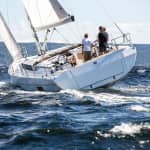
The research vessel "Vektor", a former police patrol boat, complements the system on the water. Research equipment and sensors are installed on the 13 metre long, robust steel vessel. It collects data in sea areas further away from the shore. Together, the units collect a wide range of information, including GPS signals, radio traffic, AIS data and aircraft movements.
All raw data is bundled in a data platform. Several AI modules extract situational information from this, including for recognising GNSS spoofing - i.e. the manipulation of navigation data. The AI identifies conspicuous traffic or behaviour patterns and reports possible threats to the relevant security authorities.
Mobile technology instead of fixed systems
A special feature of the "KIRMES" system is its flexibility. Instead of fixed installations, it relies on mobile units. These can be set up quickly at different locations as required - and without having to go through complex planning permission procedures. The system can also be expanded with additional sensors or analysis algorithms as required.
Kiel Fjord as a test area for AI system
Depending on the weather conditions, the measuring units currently have a range of 15 to 30 nautical miles. The test phase is taking place on the Kiel Fjord, which is well suited as a manageable area. Due to the high volume of traffic, the AI receives a lot of data in order to train effectively. Sailors and motor boaters must assume that their movements, radio transmissions and AIS information will also be recorded and analysed across the board in this popular recreational boating area. What happens to this data is unclear.
Also interesting for other areas
Other industries could also benefit from the "KIRMES" system. Logistics companies could use the data to manage shipping traffic more efficiently and thus avoid costly delays. Operators of offshore wind farms, submarine cables and pipelines could also use the system to protect their critical infrastructure not only from physical damage, but also from cyber attacks. Research institutions would also benefit from real-time data sets, for example for climate research, environmental protection and logistics analyses.
The use of "KIRMES" is intended to improve safety on the water for recreational boaters. Dangerous situations, such as when a ship in the shadow fleet manipulates its GPS data, could be recognised at an early stage with the system and defused in good time.
The test phase of the AI system "KIRMES" should be completed by the end of 2026. The system could then be put into regular operation.
- You may also be interested in this article: Satellite-independent backup system for the Baltic Sea enters next phase

Antonia von Lamezan
Volontärin
