


- Globe40: the challenges after the low blow
- First complex repair, then return to the race
- Plenty of encouragement from outside for the German duo
- A stroke of luck: the mast is still standing
- Date for re-entry into Globe40 still open
- Top duel on course for Sydney: "Crédit Mutuel" in the lead
Eight days to the scene of the accident and probably 14 days back. These two time periods show how hard the boomerang and shroud breakage on 30 November hit Lennart Burke and Melwin Fink in Globe40. Because their damaged rig is irreparable at sea, the two co-skippers from Hamburg were forced to officially abandon the current third stage. They have been on the difficult return journey to the harbour of La Réunion for a week now.
Globe40: the challenges after the low blow
Handicapped by the necessary consideration for the mast and the associated slow speed of around four to five knots on average, Team Next Generation Boating is making very slow progress on its first circumnavigation of the world in slow gear. "We're hanging in there, but it's very, very tough," described Lennart Burke on 2 Advent seven days after the accident the current challenge after the low blow.
"The only thing that's important right now is that our mast stays up. We can't sleep peacefully with the rig yet because the spreader has actually shifted a bit. It's only being pushed up there by the top shroud and lashings that we made to hold it in place. But I don't think the lashings would hold if the spreader slipped. There's so much pressure on the shrouds. It's hard to say," mused Melwin Fink on Sunday evening.
The crew last expected to arrive in the port of La Réunion between 13 and 14 December. But Melwin Fink also had some good news: "If everything goes according to plan, we will receive our spare parts on 17 December. That's not entirely certain yet, even though it has been confirmed. Then the plan is to take the boat to Chile or Brazil. We don't know exactly yet. Our dream, of course, is to sail to Chile. Or to get there by some other means. There are a few possibilities..."
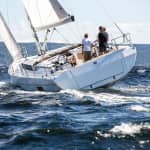
We have to sound out what is possible for us. And what really makes sense and is realistic." Melwin Fink
The time frame that Lennart Burke and Melwin Fink have to react to, depending on their possibilities after the repairs have been made, is this: The fourth of six legs in the Globe40 will take the remaining seven double-handed crews from Sydney to Valparaiso from 1 January without the German team. The fleet of the Class40 circumnavigation is expected to arrive in the Chilean harbour at the end of January. The starting signal for the fifth leg to Recife will be given on 18 February. The field is expected to arrive in the Brazilian leg harbour in mid-March.
First complex repair, then return to the race
From there, on 29 March, it will take around two and a half weeks to return to the start and finish port of Lorient, where the race began with the prologue on 4 September this year. According to Fink, the absolute contingency plan for the Next Generation Boating Around the World team would be to sail to Brazil. In general, however, the first plan is to "repair the boat properly and check the mast properly". It won't be an easy ride.
Melwin Fink explains: "It's not just about replacing the parts. The spreader will also be damaged. After all this time, we have to be sure that the mast isn't damaged as well. The shroud has to be replaced. Either we need more parts from Europe, or we have to take things on board in Cape Town. For example, we won't be able to press the rod on La Réunion. That's pretty certain. The question is whether we send it over or stop in Cape Town on the way over and swap it there."
For Lennart Burke and Melwin Fink, the chain of questions and challenges triggered by the break in Globe40 is never-ending. And every time they search for the best answers, the motto is: What makes the most sense, what is the most realistic? The material damage also weighs heavily on the young team, which had already started the circumnavigation with a tight budget. The costs are expected to be between 4000 and 10,000 euros. Flights, rebookings and other logistical necessities are likely to add another 10,000 to 15,000 euros to the team's account.
Plenty of encouragement from outside for the German duo
The planned trip to Australia over Christmas has been cancelled. "That's pretty stupid for everyone, it's really thrown us off track. But unfortunately that's part of this technical sport. We never thought it would happen to us because we've always taken really good care of our boat. But it looks like something that we couldn't have controlled has broken," says Melwin Fink.
What concerns the crew is what at first glance appears to be a causeless break. Melwin Fink says: "The spreaders were not even under load when we sailed downwind. We had about 25 knots of wind, maybe 30 in gusts, but it didn't matter, it was downwind. We had serviced our mast before the regatta and checked everything. Either there were some hairline cracks or there was already something there that you couldn't have seen," said Melwin Fink.
We are definitely shaken. But that's life. We now have to make the best of it and find good solutions." Melwin Fink
Lennart Burke and Melwin Fink are doing well under the circumstances. It was good for morale that there was a lot of encouragement from outside for the youngest crew at Globe40. "It's incredible what you've communicated, how much you believe in us, how much you're behind us. That really made a huge impression on us and is extremely motivating for us to keep going and give it our all," said Lennart Burke on 7 December. The two sailors have now set their sights on the future.
A stroke of luck: the mast is still standing
Melwin Fink said: "A week after the accident, we look back positively and are pleased that our mast is still standing. And that we got out of the situation so well. We had a lot of wind when it happened. We were able to recover our sails properly. We were able to sail well out of the south and are now in fairly safe waters where not much else happens apart from thunderstorms. We're happy that nothing worse happened and have to look at it that way."
"Initially," says Melwin Fink, "we thought it was just the shroud that had fallen out. We had already come up with solutions and spoken to riggers on land about how we could repair it. We had a good plan to repair the whole thing with lashings and Dynema. But of course we also asked ourselves the whole time how it could be that the shroud just fell out."
The sailors had thought of corrosion or a minor breakage. "Then we went forwards and thought that it wasn't possible. That it couldn't be that it would just fall out. Then we saw that the spreaders had completely broken through. That's when we realised that it wasn't so much fun anymore and that we needed a new plan."
Date for re-entry into Globe40 still open
The initial hope was that the team would still be able to sail on to Australia and make it back to the race on time after "decent repairs". "But no matter how we twisted and turned it: It wouldn't have worked out in terms of time. With 2,000 nautical miles, we would have had a much longer transfer than with 1,400. We would have had to transfer on time and get the parts on time. No matter how we had calculated it: We wouldn't have got to the start on time," says Melwin Fink, explaining the dilemma of the last week.
He continued: "We wouldn't have been able to manage the 48-hour start time either. Everything would have meant that we would have started the Pacific leg with a boat that hadn't been overtaken. Which would not have been responsible in any way: crossing two oceans with a boat that hadn't been overtaken." On a technical level, after the tough decision to return to La Réunion, the team mainly discussed with riggers what was still reasonable for the battered boat and how everything could be secured. This was not their speciality, but others did not really want to commit to what was still possible - and what was not.
"In the end, we were on our own again and had to decide for ourselves what to do," said Melwin Fink on this Globe40 Sunday. The crew had discussed a lot with each other and with their team, put all the facts on the table and made a joint decision on where the GermanClass40 should sail to for repairs and how things could then continue. Part one of the decision is known, part two is open for the time being.
Top duel on course for Sydney: "Crédit Mutuel" in the lead
Lennart Burke and Melwin Fink have more time than they would like to watch the competition from an unfortunate distance. "They're really fighting with each other at the front. They will probably arrive at a similar time to us in La Réunion. They've done a lot of boarding, they've clocked up some cracking times. We're jealous that we couldn't be part of it. But that's the way it is."
On leg three on Sunday evening, "Crédit Mutuel" led by around 75 nautical miles ahead of Team Belgium Ocean Racing - Curium with a good 1000 nautical miles to the stage harbour of Sydney. Click here for the Globe40 tracker and all rankings.
Meanwhile, Lennart Burke and Melwin Fink inevitably have other priorities. Melwin Fink said: "It remains important for us not to lose our spirit. The race is by no means over for us. That is at the very, very top of the list. We want to get back into the race with the best possible scenario and definitely finish it. It wasn't enough for the whole lap around the world, but it's important for us to finish and find good solutions. Then we have achieved a lot for ourselves and made the best of the situation."
