


America's Cup: Why New Zealand's new AC75 stayed ashore


"Taihoro" first out of the hall
Emirates Team New Zealand was the first team in the new America's Cup cycle to push its AC75 "Taihoro" back into the limelight. In doing so, the New Zealanders made a first strong statement, with the defending champions presenting the boat as the next big step on the way to defending their title in Naples in 2027.
But the real aha moment, the first outing of the new boat, did not materialise. The reason was not a technical problem, but the decision not to take any unnecessary risks in the given conditions. The wind picked up earlier and stronger than expected. For a boat that may look familiar, but has been thoroughly overhauled in important areas, this was not a day for a première. The mast was lowered again, the boat returned to the hall and the first day of sailing was postponed.
This decision already says a lot about the new phase of the America's Cup. Every test day is valuable. The boats are extremely complex, the loads are enormous and the learning curve is high. At the same time, the number of operating days is limited to 45 until mid-January 2027. If you risk damage at an early stage of development, you not only lose material, but above all time. A single lost test day can make a big difference.
Not a completely new boat
Perhaps the most important point about "Taihoro" is that this boat is not a completely new build. It is the existing AC75 platform with which Emirates Team New Zealand was already successful in the last Cup cycle. This is a consequence of the current regulations.
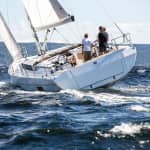
The 38th America's Cup is more focused on cost control, predictability and structural stabilisation than previous editions. The competition should not only remain technologically fascinating, but also become more economically controllable. This is why the teams are not allowed to develop completely new AC75 hulls. Instead, they must continue to work with the existing platforms and may only modify them within a precisely defined framework. This fundamentally changes the development logic of the Cup. The classic big leap in the form of a radically new boat concept is restricted. As a result, progress will shift more towards the details. You can read more about the new rules in our Special article.
Where the rules allow changes
There is room for change, but it is clearly limited. Modifications were possible in three main directions. Firstly, the cockpit could be reconfigured to adapt the layout to the crew's new way of working. Secondly, structural modifications were permitted to a limited extent, although the basic shape of the fuselage had to be retained. In addition, functional cut-outs and detailed adjustments were made to improve aerodynamic efficiency.
Batteries instead of pedals
One of the most visible consequences of the new regulations is the end of cyclists. The athletes who generated hydraulic energy with their legs in previous Cups are now banned. They will be replaced by a standardised battery system. This changes the architecture of the boat, the energy balance and the tasks on board. Where previously brute physical endurance was part of the overall concept, the management of limited energy resources is now taking centre stage.
There is also an important change in terms of sporting policy: at least one woman must sail on every AC75 in the 38th America's Cup. For the New Zealanders, this is likely to be the 49erFX Olympic gold and silver medallist Jo Aleh. This is not only symbolically relevant, but also has concrete sporting and organisational consequences. The path from the junior and women's formats to the actual Cup will be much clearer than before.
How the new crew concept will affect the distribution of the crew in the cockpit was not yet apparent during the rollout. There were simply no photos of the deck. Previously, one helmsman, one sail trimmer and two cyclists sat on each side of the boat and the positions were not changed. Now the core crew consists of five active members, including one woman, as well as a guest sailor.
Early take-off as a clear development focus
Dan Bernasconi, chief designer of the New Zealanders, made it clear at the rollout of "Taihoro" why a boat that looks familiar on the outside can still take a significant step forward internally. He said that although the hull remains the most striking feature of a Cup boat, its importance in terms of performance is often overestimated. This is because the hulls spend so much time out of the water that the differences in their performance are smaller than many people realise.
Bernasconi was also very clear about where Team New Zealand expects the biggest immediate performance gain. "The biggest difference in performance will be an earlier take-off." This means reaching a stable foiling state more quickly, especially in light winds.
This improvement was achieved primarily by reducing weight. "We have taken a lot of weight out of the boat." Interestingly, Bernasconi also reveals the other side of the coin. A lighter boat does not automatically only bring advantages under all conditions. Especially as the weight was obviously saved to a large extent on the foils, whose windward side contributes to the righting moment. "In strong winds, the boat would therefore be slower on paper. But we compensate for this with better foils, better sails and better control systems. Overall, the top speed will probably remain similar or even increase slightly. The difference is likely to be greater in the lower wind range."
Will the upcoming Cup be exciting?
The new America's Cup is likely to become even closer as a result. If there are no new hulls, costs are more tightly capped, the cycle is condensed and the open areas of development move more into highly complex areas of detail, then the teams will tend to move closer together. Bernasconi assumes that racing will be much closer between all teams this time round.
