


Dear readers,
For some time now, we have been receiving an increasing number of reports from sailing clubs that are celebrating their 100th anniversary. This year, these include the Brunsbüttel Sailing Association, the Warnemünde Sailing Club and the Norderney Sailing Club, to name but a few. 1924, 1925, 1926 - if you look at old association registers today, you will come across a veritable founding fever. And this has a very specific historical background: after the end of the First World War and the monarchy, there was a great longing for freedom, peace and community in Germany, as in many other countries. In addition, the Weimar Republic brought a democratic awakening - and sailing, until then a rather elitist pastime, became more accessible to the middle classes.
The 1920s were also a time of technical breakthroughs: smaller boats became more affordable and easier to build. Class boats and dinghies were created, ideal for training and regattas. Clubs were founded, jetties were built, people met to sail to and from races and repair weekends. Club life became the backbone of German sailing.
For decades, the sailing club was more than just a place to moor a boat: it was a home, a craft school and a social microcosm. Young people learned knots and camaraderie here, adults drank harbour coffees and negotiated jetty regulations and starboard rights. Sailing boomed in the 1960s to 1980s - with the economy came the boats. Almost every family had a member who did "something to do with sailing". Club regattas were popular festivals and volunteering was not a foreign concept.
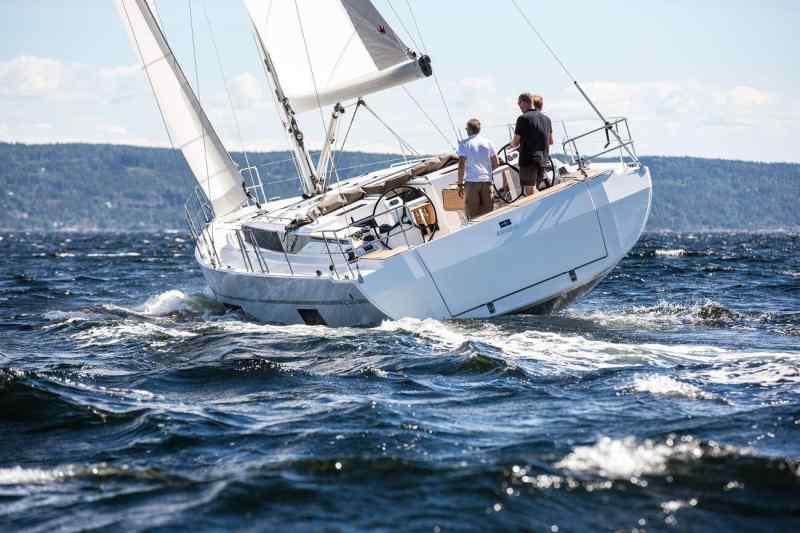
And today? The coronavirus pandemic acted as a catalyst for sailing. Owning your own boat suddenly became a private holiday paradise, second-hand boats became scarce and apprenticeships were in demand. Thanks to YouTubers, Instagram logbooks and circumnavigators like Boris Herrmann, the sport is once again visible, young and cool. Sailing means: nature, freedom, adventure - and yes, lifestyle too.
But club life? Unfortunately, this is anything but hip for many young people. Membership applications? Board meetings? Working hours on the jetty? That puts many people off. Especially the young Generation Z, who are often accused of being unwilling to perform, of no longer wanting to make commitments and of being too little involved. Many clubs complain about ageing and a lack of young talent. The youth sections are shrinking, the club boat is only used sporadically and... no one is coming forward for the next chairman. The "golden generation" that built everything up is getting older - and sometimes a little tired.
However, club fatigue in Germany is not an entirely new phenomenon. "Every German in two clubs: This traditional formula no longer applies," writes the Foundation for Future Studies. While 62 per cent of Germans were still members of a club in 1990, today the figure is only 44 per cent. The modern leisure traveller wants to remain independent. City dwellers in particular are tired of clubs. Many people regard clubbing as staid and provincial.
Sailing clubs occupy a somewhat special position in the club landscape. Compared to bowling or shooting clubs, they have less to fight against a dusty image than, unfortunately, often against the elitist idea of a club. And unfortunately, the reality is that mooring prices are rising. Voluntary work is becoming more bureaucratic, and many families simply can no longer afford to sail - or don't even know that it is possible to do so cheaply and without their own boat - by joining a club.
People have much more free time today than they did 50 years ago. However, the increase in leisure time and the range of activities on offer only means that they want to be more individual and spontaneous. Try SUP this summer, kitesurfing next summer and maybe sailing again the summer after that - the motto seems to be: don't be tied down.
Yet this is exactly what would be so valuable today: binding commitment, supportive community, intergenerational exchange. Everything that has become rare in our fast-paced, often lonely world can still be found in sailing clubs.
100 years - no wonder that a little dust has collected in one corner or another. Perhaps some anniversary celebrations are an occasion for a major clean. Sailing clubs need to change without bending. Many are already actively doing this. New target groups are being addressed with modern communication, low-threshold membership models and taster programmes. Co-operations with schools, social institutions or environmental projects create new talent.
However, the solution cannot just lie in abolishing compulsory lessons and offering sporadic participation instead of compulsory membership. A "club bully" is a derogatory term used to describe someone who is "too involved" in their club. So perhaps voluntary work itself should be dusted off: more enjoyment in taking part. Projects instead of posts. Sharing responsibility instead of letting it fall on a few shoulders. The future of sailing clubs will be decided above all by people who are willing to do more than just hand out likes - but perhaps also sweep the clubhouse from time to time.
Jill Grigoleit
YACHT editor
Recommended reading from the editorial team

Malizia 4
First the damage to the foil, now the mainsail has torn

First the damage to the foil, then broken hull reinforcements, and now a tear in the mainsail. Two new videos show how Team Malizia is repairing and further developing the IMOCA ahead of the Route du Rhum.
Silting up of the Elbe
Small ports are fighting for every metre of water depth

The Lower Elbe is silting up, time windows are shrinking and ports are becoming difficult to reach. With flat-bottomed boats and homemade dredgers, sailors are fighting to preserve their fishing grounds.
Propulsion
Max Bianchi variable-pitch propeller, which adjusts its pitch whilst the aircraft is in flight

A variable-pitch propeller that automatically adjusts its pitch whilst in flight: this is what Max Prop’s Max Bianchi model is designed to achieve in powered flight and motor-sailing.
Interview
What is it like to work on board the ‘Thor Heyerdahl’?

The ‘Thor Heyerdahl’ has been sailing the world’s oceans for more than 40 years. YACHT editor Fabian Boerger explains why this historic vessel remains relevant.
Hurricanes 2026
Dramatic rescue off the coast of California – El Niño shapes the storm season

A lifeguard rescues a sailor from a partially flooded yacht off the coast of California. Why the 2026 hurricane season is turning out so differently between the Atlantic and the Pacific.
Blue-water yachts
These five are heading to the ends of the earth

Five blue-water yachts, five designs: the Boréal 56, Kraken 58, Pure 49, Stem 50 and Breehorn 55 demonstrate their strengths and weaknesses on a long-distance voyage.
Record low water level in Lake Zurich
Sailing yacht flown by helicopter to its winter storage facility

Water levels in Lake Zurich are below the previous record low. Because his sailing yacht was stuck in the shallow water and in danger of capsizing, a 65-year-old owner had his boat airlifted out by helicopter. The operation cost around 2,000 francs and highlights just how much the exceptionally low water level is now affecting navigation.
Series of thefts continues
Thieves make off with two 300 PS outboard motors from Wieltsee

Thieves have struck again at Wieltsee: they have stolen two boats and removed heavy outboard motors. This is already the fourth such incident in three months.
Second-hand boat of the week
Arietta 31 – the dawn of an era

A narrow waist, mahogany hull and elegant overhangs: the Arietta 31, designed by Olle Enderlein, prioritises balanced lines and seaworthiness over maximum living space. As a forerunner of later Scandinavian cruising yachts, it is now an interesting classic for sailors seeking a traditional, compact cruising yacht.
Breehorn 55 review
Is it the ideal home at sea?

A pilothouse, teak fittings and an unusually accessible service tunnel: this is how the Breehorn 55 works below deck, and these compromises remain.
Newsletter: YACHT-Woche
Der Yacht Newsletter fasst die wichtigsten Themen der Woche zusammen, alle Top-Themen kompakt und direkt in deiner Mail-Box. Einfach anmelden: