


Dear readers,
"Sailing is only for the rich." I think almost every sailor has had to deal with this prejudice at some point, and in some areas it's not entirely wrong.
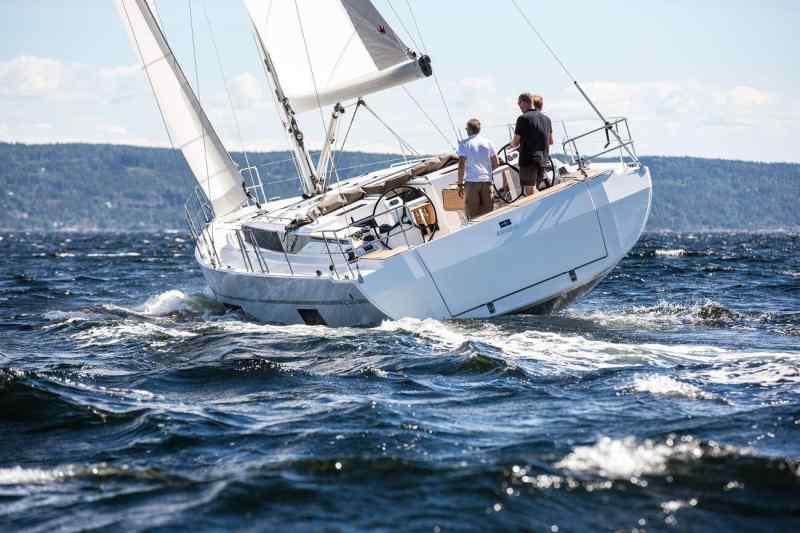
If you look at the current regattas in Germany and especially at events such as the recent "Major", a problem quickly becomes apparent. With market values of around 10,000 euros, an X-79 or a Banner 28 are now almost among the cheapest boats in the field. The majority of the fleet, on the other hand, is well over 60,000 euros, with many boats probably in the 150,000 euro range.
And of course, no one disputes that modern boats are fascinating. They are faster, more technical and often more professionally prepared. But this is precisely where the problem lies. Because the higher the entry costs become, the smaller the group of people who can still sail at all inevitably becomes.
This can now also be seen in the class structures. ORC 4 is practically dead, ORC 3 is also struggling to survive in many places. Only in ORC 2 and ORC 1 are the fields becoming somewhat larger again. The standard is high there, but so are the budgets in most cases. Many teams and owners then migrate directly to the TP50 or Clubswan scene. Currently, they also like the Cape31.
For the YACHT I am currently taking part in a project for the upcoming Vegvisir Race together with my colleague Fabian Boeger. With an old long keeler from the 1970s, my grandfather's boat. And this decision alone regularly causes discussions and we have already found out through letters to the editor, social media comments or personal speeches that our boat is probably not the typical choice for a regatta boat. Many people don't understand why you would even want to compete with a boat like this.
The idea behind it is actually quite simple: we want to show that regatta sailing doesn't necessarily have to depend on the boat. Sure, we could charter a modern boat somewhere and would probably be faster with it. But that's not what we're about. And to be honest, would that still be the same idea behind many of these events? Taking part is everything - this Olympic principle sometimes seems surprisingly far away in modern regatta sailing.
Why does it always have to be the latest, fastest or "perfect" boat? The Erria is there, she's ready to sail, she works. So why not start with her? We won't win with it. We realise that. But that's not the point either. If we have a good time on the water, our tactics work, we see progress and develop as a team, then that's already a success for us.
And these are exactly the same things that drive others: Making decisions, dealing with conditions, getting the best out of the boat. Whether you end up with five or six knots on the log is often less important than you think.
At the same time, you have to be honest: regattas such as the Vegvisir or the Silverrudder are growing, while classic series or ORC fields are getting smaller. Kieler Woche and many other large regattas are also struggling with declining participation. The question is: why?
For me, one answer is pretty obvious: it is simply no longer affordable for many people. A simple regatta boat that is 20 years old costs around 80,000 euros, plus new sails, optimisations, software like AdrenaPro for several thousand euros - that's hardly realistic for a person in their mid-twenties. It only works with sponsors or external donors. And sponsorship almost always brings with it expectations, which in turn change the sport for you. There is no question that external funding is important. This applies to many sports - without it, even handball or football clubs would hardly be conceivable in their current form. But it is also no longer self-determination.
If you want to sail competitively and want to keep costs reasonably under control, you often end up in a dinghy or, to put it bluntly, with someone on the foredeck. I've had my own experiences with dinghies - and yes, they are much more affordable. But when it comes to things like training camps or international regattas, this system also reaches its limits. Being on board with others is good. You learn a lot, meet like-minded people and have a good time, and apart from the project, I also sail in various other boat classes. However, I am increasingly bothered by the fact that I am not the owner and helmsman myself.
So what remains? Perhaps what parents often tell you: work with what you have. And make the best of it.
In our case, this is precisely the Erria. And if I'm honest: I wouldn't say that we will have less fun than someone travelling on a Dehler 30 OD. At least not from my point of view and as long as the Dehler doesn't start planing - because then I'd be happy to swap.
Jan-Ole Puls
YACHT editor
Umfrage beendet
Recommended reading from the editorial team

Malizia 4
First the damage to the foil, now the mainsail has torn

First the damage to the foil, then broken hull reinforcements, and now a tear in the mainsail. Two new videos show how Team Malizia is repairing and further developing the IMOCA ahead of the Route du Rhum.
Silting up of the Elbe
Small ports are fighting for every metre of water depth

The Lower Elbe is silting up, time windows are shrinking and ports are becoming difficult to reach. With flat-bottomed boats and homemade dredgers, sailors are fighting to preserve their fishing grounds.
Propulsion
Max Bianchi variable-pitch propeller, which adjusts its pitch whilst the aircraft is in flight

A variable-pitch propeller that automatically adjusts its pitch whilst in flight: this is what Max Prop’s Max Bianchi model is designed to achieve in powered flight and motor-sailing.
Interview
What is it like to work on board the ‘Thor Heyerdahl’?

The ‘Thor Heyerdahl’ has been sailing the world’s oceans for more than 40 years. YACHT editor Fabian Boerger explains why this historic vessel remains relevant.
Hurricanes 2026
Dramatic rescue off the coast of California – El Niño shapes the storm season

A lifeguard rescues a sailor from a partially flooded yacht off the coast of California. Why the 2026 hurricane season is turning out so differently between the Atlantic and the Pacific.
Blue-water yachts
These five are heading to the ends of the earth

Five blue-water yachts, five designs: the Boréal 56, Kraken 58, Pure 49, Stem 50 and Breehorn 55 demonstrate their strengths and weaknesses on a long-distance voyage.
Record low water level in Lake Zurich
Sailing yacht flown by helicopter to its winter storage facility

Water levels in Lake Zurich are below the previous record low. Because his sailing yacht was stuck in the shallow water and in danger of capsizing, a 65-year-old owner had his boat airlifted out by helicopter. The operation cost around 2,000 francs and highlights just how much the exceptionally low water level is now affecting navigation.
Series of thefts continues
Thieves make off with two 300 PS outboard motors from Wieltsee

Thieves have struck again at Wieltsee: they have stolen two boats and removed heavy outboard motors. This is already the fourth such incident in three months.
Second-hand boat of the week
Arietta 31 – the dawn of an era

A narrow waist, mahogany hull and elegant overhangs: the Arietta 31, designed by Olle Enderlein, prioritises balanced lines and seaworthiness over maximum living space. As a forerunner of later Scandinavian cruising yachts, it is now an interesting classic for sailors seeking a traditional, compact cruising yacht.
Breehorn 55 review
Is it the ideal home at sea?

A pilothouse, teak fittings and an unusually accessible service tunnel: this is how the Breehorn 55 works below deck, and these compromises remain.
Newsletter: YACHT-Woche
Der Yacht Newsletter fasst die wichtigsten Themen der Woche zusammen, alle Top-Themen kompakt und direkt in deiner Mail-Box. Einfach anmelden: