


Marine conservation: Pupils conduct research at sea with the "Aldebaran"
YACHT-Redaktion
· 15.12.2025

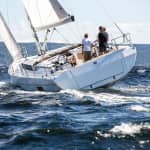
Since 2005, the marine competition "Research at Sea", organised by the German Marine Foundation, has offered school students from all over Germany the opportunity to develop their own research projects on current marine conservation issues and implement them as part of real expeditions on the North Sea or Baltic Sea. On board the research sailing yacht "Aldebaran", the participants were once again given a practical insight into modern marine research this year and worked with professional equipment under scientific supervision. The competition is part of the UN Decade of Ocean Science for Sustainable Development and promotes young people's understanding of the importance of healthy oceans in the context of climate, biodiversity and sustainability.
Application and selection of projects
The competition was launched with a project outline in which the students set out their research question, outlined a suitable methodological approach and categorised the technical relevance of their project. This outline formed the basis of the selection process and made it possible to realistically assess the quality and feasibility of the projects submitted. The project outlines were assessed by an independent and interdisciplinary jury, which has provided expert support for the competition for many years. In 2025, this panel included Prof. em. Dr Hartmut Graßl, Prof. Dr Dieter Hanelt, Dr Lena Rönn, Dr Georg Heiss, Dr Andreas Schmidt-Rhaesa, Lina Röschel and Deniz Vural.
PFAS in seagrass meadows
The first winning team investigated whether seagrass meadows in the Baltic Sea can represent a sink for so-called PFAS (per- and polyfluorinated alkyl substances). These persistent industrial chemicals, also known as "eternity chemicals", are hardly degradable in the environment and pose a growing risk to marine organisms and ultimately also to humans. Seagrass meadows are considered biodiversity hotspots and play a key role in climate protection, as they bind large amounts of CO₂.
During the research trip from 3 to 7 July 2025, water samples were taken using Niskin bottles and basic parameters such as temperature, pH value and oxygen content were measured using an EXO probe. The students also collected sediment and seagrass samples, which were later analysed for PFAS.
Initial observations on board indicated that there were differences between samples from seagrass meadows and open sediment areas - an indication that seagrass could play a role in binding pollutants. The subsequent laboratory analyses confirmed this impression, as PFAS was only detected in the macrophytes and seagrass had significantly higher concentrations than brown algae. This indicates that seagrass meadows do indeed act as natural pollutant reservoirs and their ecological relevance for the coastal sea must therefore be emphasised.
Wrecks as time bombs
The second team investigated the ecological role of wrecks in the Baltic Sea. On the one hand, they can create valuable habitats as artificial reefs, but at the same time pose a threat to the environment as they can release heavy metals, oil and fuel residues as well as ammunition residues. During the research cruise from 14 to 19 August 2025, the team investigated a total of five wrecks in the Mecklenburg Bight, including sites with known munitions contamination.
An underwater drone was used for localisation and visual exploration, which helped to make the structures visible underwater. In addition, an EXO probe was used to measure basic water parameters such as oxygen content, pH value, temperature and conductivity in the vicinity of the wreck. A particular focus was on the question of whether explosives were leaking into the water from munitions wrecks. To do this, the team used special infusion bags with filter columns to collect water samples and bind potentially harmful substances directly.
Prof Edmund Maser from the Institute of Toxicology at Kiel University accompanied the team as a science mentor. With his expertise in the toxicology of pollutants, explosives and heavy metals, he supported the students in categorising the samples obtained and understanding the environmentally relevant risks. In the end, traces of compounds typical of explosives such as RDX and 1,3-DNB were detected in all the water samples analysed, albeit only in very low concentrations.
Microplastics - pollution in water and mussels
The third team investigated microplastic pollution in the Elbe. During the expedition from 9 to 14 September 2025, it collected water and plankton samples at eight stations along the Elbe from Cuxhaven to Hamburg. Both surface and depth samples were taken at each station in order to obtain a comprehensive picture of microplastic pollution.
The water samples were coloured with Nile Red after filtration and examined under a UV lamp, while the plankton samples were analysed using a stereomicroscope. Microplastic particles were detected at all stations, regardless of depth or location.
