


Smartboat: 18 systems for safety, monitoring and control


Updated on 14 September 2026
Want to switch on the fridge or the heating whilst on your way to the boat? Check at home whether all the hatches are actually closed? With the help of remote monitoring systems, it’s possible to check whether the bilge is still dry whilst at the same time chilling your drinks for the weekend. What has long been standard practice in cars and motorhomes is now attracting increasing attention in the yachting sector too. And by no means only in the premium segment. This is made possible by the increasing connectivity of on-board systems and widespread mobile network coverage.
Even if there are no sensors or electrical systems on board, a remote bilge monitoring system, for example, can be retrofitted easily and at relatively little cost. What might initially sound like a technical gimmick can actually be quite useful. Many owners want to know what the battery voltage is on board, or whether they need to top up the diesel or water before their weekend trip.
Geofencing, Alerts and Overview
So-called geofencing triggers an alarm if a boat moves out of a defined area or, for example, enters a restricted zone or heads towards a shoal. Acceleration sensors detect sudden changes in speed and indicate, for example, to a charter operator whether the boat has run aground.
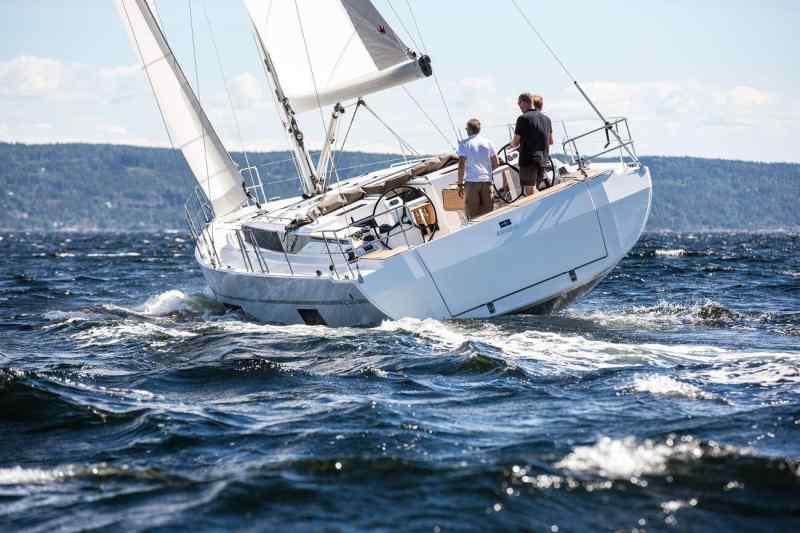
With a little experience, owners can use acceleration sensors to gauge whether the boat is still securely moored at its berth in strong winds. Geofencing can be used as an anchor alarm. If the vessel moves outside the defined area, a warning is sent to the owner’s mobile phone. The system can also help in the event of theft. If the digital fence is set up around the harbour, the owner is notified as soon as their yacht leaves the marina. As long as there is a mobile network signal, the yacht transmits its position.
Digital switching adds further functions. When the battery is low, the generator can be activated remotely, and the bilge pump can also be controlled when no one is on board. For charter operators, there is a further advantage: they can always monitor the current location of their vessels.
Sensors, data transmission and anti-theft protection
To protect against unauthorised access, door and hatch contacts, as well as motion detectors inside the vessel, can monitor whether any areas are being opened or whether anyone is on board. Technical problems, on the other hand, can be detected at an early stage using temperature or smoke sensors. A failure in the shore power supply can also be detected using suitable sensors if required. Some systems also allow the harbour master or a service provider to be notified automatically in the event of an alarm, for example if the smoke detector is triggered or the battery temperature rises abnormally.
Position and voltage monitoring are virtually standard features. However, the range of additional sensors and switching functions available varies considerably and depends on whether the system is primarily intended as an advanced alarm system, a remote control system, or for voyage logging and data analysis.
The way data is transferred from the boat to a smartphone or to a location on land can vary considerably. Hello Sailor uses direct communication via text message. Most other systems, by contrast, send their data via the internet to an app or to the manufacturer’s cloud. This often requires a subscription, which incurs additional costs. Depending on the provider, these usually range from 50 to 180 euros per year, although mobile data transmission is usually already included in the price.
A standard designed for the Internet of Things (IoT), such as Narrowband LTE or LTE-M, is often used for this purpose. The advantage of these systems is that they offer good network coverage and are comparatively cost-effective. The data rates are more than adequate for tracking; however, one should not expect a broadband internet connection. For this reason, Smartboatia, for example, only synchronises the NMEA data collected in the hub with the cloud when the hub is connected to a Wi-Fi network.
Community-based solutions can also be used
One notable feature is the LoRaWAN technology used by Boat-Officer. It is independent of the mobile network and requires very little energy. As well as commercial providers, there are also community networks such as The Things Network. Whilst these can be used free of charge, they do not offer comprehensive coverage across the whole of Europe. You can check the current network roll-out online. The advantage of the community solution is that if your mooring already has Wi-Fi but no LoRaWAN, you can set up the network using a simple plug-in router for around 140 euros.
MeSense, ZigBoat and the Orca Core do not have their own internet access. They rely on the fact that a mobile router is often already available on board, and then connect to it via Wi-Fi. This means that, at least with ZigBoat, there are no additional costs for the data connection. MeSense, on the other hand, funds its cloud service via a subscription. At the mooring, the harbour’s Wi-Fi can also be used. However, in the event of theft, the transmission of the vessel’s position would quickly be interrupted if the external router were no longer available.
Power consumption is a key factor, particularly for battery-powered solutions such as BoatOfficer or Sense4Boat. Their self-contained sensors are designed to last up to five years without needing a battery change. Devices connected to the on-board electrical system should also consume as little energy as possible. As monitoring is generally intended to take place round the clock, the equipment must remain switched on at all times. However, this can lead to problems or increased energy consumption, particularly during longer periods when the boat is moored.
At least that way, you can monitor in real time on your mobile how the on-board batteries are discharging – and you’ll be warned in good time.
Navigation solutions with monitoring
Orca


- Costs: 649 euros
- Cover: Not applicable
- Running costs/subscription: 149 euros per year, Orca Smart Navigation
- Gateway: Wi-Fi or an external router is required
The remote monitoring functions of the Norwegian navigation app are still under development. To use them, you need the central unit known as the Orca Core 2. At present, it is possible to mark an area on the map that the boat should not leave (geofence). If the Core crosses the boundary, an alarm is triggered on all apps connected to the Core. If an internet connection is available, this alarm also works outside the boat and can be used as an anchor alarm. In addition, the Core generates an automatic logbook and records the position, supply voltage and data from the NMEA2000 on-board network. As soon as an internet connection is available, this data is uploaded to the Orca Cloud and can be accessed remotely via the app. Further information: getorca.com
Q2 display


- Costs: 1,900 euros, 229 euros for the cable set
- Cover: across Europe
- Running costs/subscription: depending on your data plan
- Gateway: built-in LTE
The plotter from Finland has a built-in 4G modem and comes with a broadband SIM card. It remains online at all times, even when the device is switched off. Using the Q-Mobile app, you can check the position remotely and set up a geofence. With a mode called Q-Guard and an optional cable set, the display also monitors the bilge, battery voltage and engine even when the device is switched off. Even if thieves were to disconnect the system, an alarm would be triggered immediately in the app. The plotter also supports digital switching. This means that, as the owner, you can, for example, switch on the heating on board from home or whilst on the move. Anyone who doesn’t want to use the Finnish provider’s data plan can simply install their own SIM card. Further information: Ferropilot.de
EasyHub DPNav


- Costs: 259 euros
- Cover: depending on the Wi-Fi or internet connection
- Running costs/subscription: none
- Gateway: built-in Wi-Fi, NMEA2000 connection
The EasyHub from DPNav integrates directly into the NMEA2000 onboard network and transmits its data via Wi-Fi to a smartphone, tablet or laptop. Wind readings, GPS position, AIS targets, battery voltages and fuel levels can thus be displayed in a web browser or in compatible navigation apps. An additional app is not strictly necessary. Thanks to the integrated cloud service, boat owners can also access the data remotely and have routes recorded automatically. However, this requires the hub to have an internet connection via an existing Wi-Fi network or a mobile router. The system does not come with its own sensors for bilge, motion or door contacts. Further information: DPNav EasyHub and YACHT review of the EasyHub
Tracker with measurement function
BoatOfficer


- Costs: 429 euros
- Cover: across Europe
- Running costs/subscription: Basic version free of charge; additional features up to 100 euros per year
- Gateway: integrated, LoRaWAN
The waterproof box is made in Munich and uses the LoRaWAN wireless protocol, which is designed for IoT devices. Advantage: There are no usage charges. The BoatOfficer can run on its internal battery for up to a year and requires no external power supply. A drawback of the free LoRaWAN solution is the limited network coverage, so you should check coverage before purchasing. The basic version includes a GPS receiver as well as acceleration and temperature sensors. In addition, up to two voltage levels can be monitored and two water sensors connected. In combination with the Pro Service, an SOS alarm can also be triggered. Further sensors are currently under development. Further information: Boatofficer.com
Hello Sailor


- Costs: from around 322 euros
- Cover: worldwide
- Running costs/subscription: None, data-only plan
- Gateway: LTE-M, free choice of provider
Hello Sailor comes from England. The system operates without a subscription or cloud connection and communicates with the phone via text message. Whilst this may seem old-fashioned at first glance, it does offer advantages: no app is required, nor do large amounts of data need to be transferred. Consequently, the only running costs are the charges for a SIM card, which can be chosen according to individual preference. The tracker is extremely energy-efficient. According to the manufacturer, it consumes just eight milliamps. Hello Sailor can monitor two batteries and three sensors, although virtually any standard switch can be used as a sensor. Geofencing, on the other hand, is not supported, but the yacht’s GPS position can be retrieved via text message. Further information: hello-sailor.co.uk
Vanemar

- Costs: Basic Set from 649 euros
- Cover: According to the tariff; available in over 200 countries
- Ongoing costs/subscription: 15.99 euros per month, annually: 159 euros
- Gateway: 4G/LTE integrated SIM card, GPS tracking and geofencing
Vanemar offers a boat monitoring system comprising modular kits. The Gateway It monitors GPS, battery status and geofences via an app, and uses a 4G/LTE SIM with global coverage, a backup battery and an anti-tamper system. Up to 20 wireless ZigBee sensors can be connected. The Basic Set includes a bilge water sensor, a door or hatch sensor, a PIR motion detector, and a temperature and humidity sensor. The Extended Set adds a smoke detector with a siren and a smart plug for shore power monitoring. All sensors are self-adhesive, can be fitted in a few minutes without drilling or wiring, and are powered by batteries that last for around two years. Additional sensors can be added at any time. Further information: Vanemar.de
My Sense


- Costs: from 264 euros, sensors from 74 euros
- Cover: Not applicable
- Running costs/subscription: Basic version free of charge; from two sensors, 30 euros per year
- Gateway: Wi-Fi or an external router is required
Weatherdock’s remote monitoring system consists of what is known as the ‘Relay’. It measures voltage and can be expanded via Bluetooth to include up to 20 sensors and eight wireless switches, including GPS receivers, voltage, temperature, acceleration, water level, door-opening and shore power sensors. Me Sense requires a marina Wi-Fi network or an external router to connect to the Weatherdock cloud. From there, the data is transmitted via the internet to the app. A 30-day history is available for all readings, and alarm thresholds can be set. The sensors are powered by a button cell battery, the charge level of which is displayed in the app. Further information: easyais.com
Sense4Boat


- Costs: 150 to 232 euros per sensor
- Cover: across Europe
- Running costs/subscription: First year included; thereafter from 63 euros per year, depending on the number of sensors
- Gateway: built-in IoT SIM
Sense4Boat was launched by the long-standing operator of Marina Punat. The system does not require a central unit. This means that each sensor is completely self-sufficient and establishes its own internet connection. To do this, the system uses the French IoT service Sigfox, which covers large parts of Europe’s coastal waters. Battery, bilge, position and temperature monitoring are available. The sensors are powered by built-in batteries for up to five years, so no cabling is required. Alarms can be configured via a free app and are sent either via the app, by text message or as a voice message. Additionally, further telephone numbers or email addresses can be added for alarm notifications. Further information: sense4boat.com
Sensar Marine


- Costs: around 475 euros
- Cover: worldwide
- Running costs/subscription: around 12 euros a month
- Gateway: Integrated, not specified
The Norwegian-American monitoring system, Sensar Marine, is limited to GPS, accelerometers, two voltage monitors, water level and temperature sensors, and a pump monitor. However, the Boat Monitor is designed to be particularly robust, meaning it can also be used in open boats. The power supply is ingenious: the integrated battery guarantees up to 50 days’ operating time. As soon as the system detects charging current in the on-board electrical system, the buffer battery is automatically recharged. The bilge sensor is not a float switch, but measures the water level. In addition, the bilge pump’s operation can be monitored, allowing faults to be detected quickly. Another handy feature is the geofence function, which activates automatically as soon as the boat remains in one place for more than 15 minutes. If the boat leaves the designated area, a warning text message is sent. Further information: Sensarmarine.com
VirCru


- Costs: from 173 euros, sensors from 68 euros
- Cover: across Europe
- Running costs/subscription: 113 euros a year
- Gateway: LTE-M, fixed SIM card
VirCru is equipped with a central unit known as a ‘hub’, as well as sensors paired via Bluetooth. Depending on requirements and the intended application, there are two hub variants: the Hub-1 has two voltage inputs and can monitor the activity of the bilge pump. The version known as Hub-2 is fitted with a GPS receiver and can monitor a battery as well as the yacht’s heeling angle. Both control units can be expanded to include various sensors via Bluetooth. For example, engine hours can be recorded or data can be transferred from Victron’s VE.Direct bus. The sensors have internal batteries providing ten years’ operation. The hub is powered by the on-board electrical system, but thanks to an internal rechargeable battery, it can also operate for a week without a power supply. Further information: Vircru.com
ZigBoat


- Costs: 549 euros, sensors from 165 euros
- Cover: Not applicable
- Running costs/subscription: none
- Gateway: Wi-Fi or an external router is required
At first glance, the Glomex system resembles the Weatherdock system. It features similar sensors, but cannot control electrical circuits. The Italian company uses the Zigbee standard – familiar from the smart home sector – to communicate with the sensors. Furthermore, ZigBoat communicates directly with the app on the smartphone via an encrypted connection. There is no need to store data with a cloud service, and therefore no need for a paid subscription. Anyone using the marina’s own Wi-Fi connection can therefore get by without any additional costs. If no Wi-Fi is available, an external router is required, as the gateway can only connect to a smartphone or another network via Wi-Fi. The sensors are battery-powered and are expected to last around three to five years. Further information: nordwest-funk.eu
Seanturion


- Costs: Core Hub €125, sensors from €25
- Cover: Depending on the tariff
- Running costs/subscription: €80 – €750 per year
- Gateway: Fixed SIM card, satellite connection optional
The Seanturion CORE Hub It is permanently installed in the boat, uses mobile data and automatically transmits all readings to a cloud, which can be accessed via an app from anywhere. Thresholds can be set via the app. If values exceed or fall below these thresholds, an alarm is triggered via push notification or email. The cost comprises the hardware (hub) and a subscription that covers cloud access, app usage and the mobile data connection, including the SIM card. According to the manufacturer, there are no additional internet costs. Sensors are optional and incur an extra charge, with the exception of GPS and battery voltage, which the hub monitors directly. Optional sensors include a float switch for the bilge, a thermometer for the engine compartment or battery compartment, and the BLE EYE sensor for temperature, humidity and changes in movement. If the connection is lost, the hub stores the data locally and automatically uploads it once the connection is restored. In the app, the status last transmitted is visible in the meantime. The hub operates on 4G and 2G networks. Where mobile coverage is unreliable away from the coast, the Vision Hub with a satellite connection is available as an optional extra. Further information: Seanturion.com
Collecting and analysing data
Smartboatia


- Costs: 999 euros
- Cover: across Europe
- Running costs/subscription: Basic package free of charge; internet connection and monitoring cost 120 euros per year.
- Gateway: Integrated LTE-NB
Smartboatia focuses on recording and analysing sailing-specific data. The hub is connected to the NMEA2000 on-board network. It features a GPS receiver, barometric pressure and acceleration sensors. It can also monitor the supply voltage and features a Wi-Fi gateway through which all NMEA2000 data can be accessed via Wi-Fi. The data is stored in the hub and analysed using AI algorithms to create a logbook or generate a polar diagram. As soon as an internet connection is available, the hub synchronises with the Smartboatia cloud, allowing the data to be shared with others. With a Smartboatia subscription, the hub uses a narrowband LTE connection and is permanently online. The subscription is also required for remote monitoring. A special feature is the hardware-based anchor alarm, which activates even when your mobile phone is switched off. Further information: smartboatia.com
Njordlink+


- Costs: 480 euros
- Cover: Not applicable
- Running costs/subscription: Basic version free of charge
- Gateway: Wi-Fi or an external router is required
Njordlink does not have its own sensors. The system is responsible for transmitting the NMEA2000 data collected on board to a cloud. It can be configured via a free app. The boat data is transmitted to the Njord Cloud, operated by Digital Yacht and Viam Robotics, and can be accessed from there via the app. Within the app, the data can be analysed by Gemini. The system is still under development but currently offers tracking and an anchor alarm that automatically calculates the expected swing radius based on water depth and chain length. However, the cloud solution is specifically designed to allow shipyards or service providers to develop their own apps for data analysis. Further information: Digitalyacht.de
Sailserver 2


- Costs: 118 euros
- Cover: across Europe
- Running costs/subscription: from 95 euros per year
- Gateway: built-in IoT SIM
The Sailserver 2 from Denmark focuses on tracking and logbook generation. The server records the position via an internal GPS receiver. Data from the on-board sensors is recorded via the NMEA2000 interface. This data is stored in the device and transmitted to the Sailserver cloud. From there, the data can be accessed via the app or web interface. With the regatta subscription, you can also carry out retrospective analyses and create customised polar diagrams, or compare them with the VPP data from an ORC certificate. There are no bilge or voltage alarms provided. Instead, an anchor alarm can be set up which monitors not only the position but also the water depth and wind conditions. Further information: Sailserver.com
Monitor and control remotely
OnDeck Hub


- Costs: 949 euros
- Cover: across Europe
- Running costs/subscription: 180 euros per year
- Gateway: built-in IoT SIM
Garmin’s OnDeck Hub allows you to monitor the boat in its entirety and remotely control up to five switching functions. The hub communicates with the chartplotter and transducers via NMEA2000. There are separate inputs for the bilge pump, as well as for the door and shore power sensors. An internal buffer battery also ensures the system can operate independently of the on-board power supply for 48 hours. Tracking and remote control are managed via Garmin’s tried-and-tested Active Captain app, with alarms also sent via text message. This has the advantage that the app does not need to be running continuously. An OnDeck subscription is required for operation, which also covers the cost of the internet connection. Further information: Garmin.com
Yachtsense


- Costs: 1,541 euros
- Cover: depending on the provider
- Running costs/subscription: None, data-only plan
- Gateway: LTE with two SIM cards, choice of provider
Raymarine’s Yachtsense system is primarily intended for factory fit by the shipyard or as part of a complete refit. The Yachtsense Link router is fitted with a GPS and features NMEA 2000 and Ethernet interfaces for connection to the on-board network. It can be configured via Wi-Fi using a web interface or, alternatively, via an Axiom chartplotter. The internal GPS can be used to monitor a geofence area. The router also has four switch outputs. It provides broadband internet access via an LTE modem. Two LTE SIM cards can be used. If the boat is fitted with Raymarine’s digital switch system, this can also be controlled remotely. Further information: raymarine.eu
Sentinel


- Costs: Lite from 699 euros, Standard 1,259 euros
- Cover: in accordance with the collective agreement – EU-wide or worldwide
- Running costs/subscription: 150 to 310 euros per year
- Gateway: built-in LTE SIM
The French Sentinel system has been on the market for several years now. It owes its popularity to the fact that HanseYachts and Beneteau have, at times, fitted the monitoring system as standard on their yachts. The current model is called the BM50 and is available in various versions. What they all have in common is that they are equipped with an integrated GPS and a fixed SIM card. In addition, three voltage levels and two switch contacts for bilge or door alarms can be monitored. Further sensors can be connected via an optional hub. The standard version also features an NMEA2000 interface and a switch output, and supports the CZone digital switching system. Further information: Ferropilot.de

Hauke Schmidt
Test & Technology editor