


Charter: With these fleets in the Mediterranean, it's worth booking an older yacht
Andreas Fritsch
· 22.03.2024


It's probably the key question for every charter booking: How do I find a base that maintains its boats really well? Where you don't have to deal with all sorts of technical defects during the cruise, rancid wet cells, blind windows, stained berth cushions, mouldy engine bilges or various other little things that occur when a boat gets on in years and the fleet operator doesn't have its care and maintenance under control.
In order to shed some light on the situation, YACHT will be asking large German charter agencies at regular intervals which companies do their job so well that they can let a regular customer go on a trip with a six, eight or even ten-year-old boat without hesitation.
Inflation also clearly noticeable in the yacht sector
This question is currently even more relevant than before. Inflation has now left deep marks on the charter market. Charter weeks have become significantly more expensive in many places, especially in 2022 and 2023. The price increases have varied greatly depending on the area. However, an increase of ten to 25 per cent is not uncommon.
If you ask the fleet operators for the reasons, they point to increased marina and personnel costs. In addition, charter yachts have recently become significantly more expensive to purchase. Uwe Heine from Four Seasons Yachting describes this quite vividly: "A few months ago, we lost a three-year-old 41-foot yacht due to grounding. I then ordered the same yacht with the same equipment again - it cost almost 40,000 euros more!"
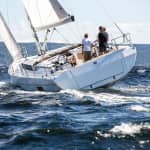
It is true that the price rally at the shipyards has slowed down in the meantime. However, this does not change the fact that the cost pressure for fleet operators is currently significantly higher than it was three years ago. Conversely, this means that charter cruises have to become more expensive in order for the so-called purchase charter model in particular to be profitable. In this model, a private individual buys a yacht and places it in a charter fleet for hire.
Or a ship has to be chartered for longer than usual so that the individual week does not become more expensive, but the owner and fleet operator still end up with a profit. There is hardly any way around this approach because customers have only been prepared to increase their budget for charter trips by around two and a half per cent for years. This was the result of a recent YACHT survey.
In view of rising prices, chartering older yachts is often an alternative
Charterers basically have several ways to save money: They settle for a smaller boat. They take shorter holidays than before. Or they rent an older boat. The latter, however, costs many people money.
"The average customer is currently asking for boats that are five to six years old. Many even only want a yacht that is no more than three years old," reports Christian Zaloudek. He is the first chairman of the Association of German Yacht Charter Companies (VDC). However, Zaloudek also says: "When we receive enquiries from customers for whom price is the most important factor, older boats are very interesting."
As an example, he cites a 45-foot yacht in Croatia at the beginning of June: "A yacht built in 2019 costs €4,600 per week with a good partner of ours. In contrast, a Bavaria of the same size from 2010 is available for 3,290 euros. As I know the boats from our flotillas personally, I can guarantee that the customer will still be completely satisfied with the older yacht."
So if you are looking for a charter yacht and are happy with an older model, you should definitely speak to an agency that knows the local fleet operators well. In the case of an enquiry by email, an agent would usually play it safe and offer younger boats. In a personal conversation, however, customers can often be convinced of the price advantage, says Zaloudek.
The agencies, which are often owner-managed, generally choose their partners carefully. They often no longer want to represent the ever-growing mass of charter companies on the market, as some providers do who work with call centres and low price guarantees. Personal contact with the provider is becoming increasingly important because: "More and more fleets are coming onto the market," says Zaloudek.
This year's YACHT charter survey in cooperation with the VDC
For this reason, YACHT conducted this year's charter survey in cooperation with the VDC, the largest industry association in Germany. Eleven of its member agencies (see tables for participants) were asked about the best charter fleets in various Mediterranean countries that also have well-preserved older ships in their programme. Of all the fleets named, those that were mentioned at least twice were included in our overview.
Of course, all the companies listed here also have newer boats on offer. However, if you are only looking for them, you should read on. After all, fleet operators who cherish and care for their old treasures are also likely to take good care of their young yachts. Of course, this does not mean that providers who do not appear in the table due to a lack of old boats in their inventory are not doing a good job. Industry giants such as Dream Yachts or Moorings & Sunsail in particular often sort out older boats as standard.
A total of 31 companies made it into the survey, around a handful more than in the last survey in 2017. What is immediately striking is that not a single French company is included. Only one made it seven years ago. What's going on?
"France is a special case. When customers want to go to Corsica, the charter almost always starts from the neighbouring Italian island of Sardinia. The boats there are tidier, the choice is greater and the flight connections from Germany are much better than to Corsica," explains Janis Kather from VDC member 1a Yachtcharter. Many Corsica sailors are therefore listed as Italy charterers by the agencies.
In contrast, demand from German charter customers has been weak for years on the French mainland coast, including the Côte d'Azur. "There are also only a few smaller fleets based there, the majority are large providers. But they hardly have any older yachts in their programme," explains Kather.
The service and quality of the charter bases depends above all on the staff on site
It is always exciting to see what changes have taken place since the last survey: Who has joined, who has dropped out? One German provider stands out in this respect: Sun Charter was listed in the top three in every survey, and the operator also maintained bases in several countries at once. In the meantime, however, Sun Charter has probably fallen significantly out of favour with agencies. The company was recently sold to investors who are now trying to restore the fleet operator to its former glory.
In general, the charter business is subject to strong fluctuations. Not least because the quality of a charter base depends above all on the staff on site. If, for example, a good manager leaves, the service and quality of a base can drop significantly within a short period of time. The agencies are also aware of this: "There are companies that have an extremely strong base, while others are rather average. We sometimes notice this in customer feedback in just one season," says Daniel Barone from Barone Yachting.
But how does a base become so good that it stands out from the crowd? We asked those who should know: the fleet operators who were mentioned most frequently by the agents. Like Olympic Yachting in Lavrion near Athens, Greece. With nine mentions, the base was praised more often than any other. And it has always been at the forefront in previous years. In the comments, the agents really rave about the Greeks. The head of the base is Marko Basialekos, who has been in charge of the family company's base with 20 ships for 29 years.
Consistency in maintenance and employee motivation as well as good equipment are the be-all and end-all
"The most important thing is the consistency with which you listen to the customer and try to solve problems immediately. When customers come back, we literally ask them if something isn't working or what they perhaps didn't like. This results in a list that is worked through until the next customer," says Basialekos. That sounds easier said than done. "Once you have found good technicians, you have to keep them and motivate them. We do this by paying them better than usual, for example."
In addition, the technical standards are being continuously developed. Basialekos: "Let's take the issue of odours on board. Nobody likes smelly bathrooms. That's why we decided years ago that the toilets should be flushed with fresh water. Even with good care, salt water always causes odours. Since then, the problem has been solved."
The ships are also well equipped: solar panels so that the refrigerator does not drain the batteries. Anchor winches are completely dismantled every year so that they don't suddenly stop working. At every check-out, the employees meticulously search for leaks in windows, fittings and so on. "That's important. Moisture in the boat can quickly become a problem," explains the base manager, adding that the checklist for each boat in winter is seven A4 pages long. "There is also a notebook with suggestions for improvement!"
Basialekos believes that none of this is really a big secret. "Any base could do it. They just don't all do it. It just comes at a price, which ultimately makes our margin per charter a little smaller than some of our competitors. At the end of the day, customer satisfaction is our top priority." They appreciate this; the repeat rate is "very high".
Small companies and family businesses often have an advantage
It is striking that, as with Olympic Yachting, many of the companies mentioned are small or even family businesses, some with no more than ten to 20 boats. In many cases, the boats are also owned by the company, so the yachts are not operated as investment properties for private individuals via purchase charters. This creates a completely different incentive to keep the boats in top condition: The longer they sail, the more they pay off for the small companies. So it's no wonder that the table shows fleet operators chartering out 20-year-old boats that customers are still delighted with.
For example, the fleet that came in second place was the Italian company Boomerang in Portisco, Sardinia. Base manager Daniele Artai reports that 30 of the 36 boats at the base belong to the company owners. "They run on charter for around eight to nine years. If a model is popular with the customer, even longer."
Work on the ships is correspondingly time-consuming. "We paint the wooden parts below deck every winter and empty and flush the diesel tank to prevent diesel fouling. All the toilets and hoses are removed, dismantled, serviced and also replaced at short intervals to prevent odours from developing in the first place," says the Italian. The boats are also completely emptied, the kitchen utensils are meticulously cleaned and the upholstery is professionally cleaned every year.
During the season, the customer then becomes the focus of the service endeavours: "Every Sunday morning, the base managers give a 30-minute briefing on the area. They recommend bays and harbours, but also restaurants. They explain where to navigate carefully and point out special features." According to Artai, every customer can download 100 tips and markers into their Navionics sat nav app on request.
The purchasing policy for the fleet is also prudent. "We often only buy one or two boats of brand new models. We let them run for a year so that we can recognise any teething troubles. Only then do we order more. This allows us to eliminate problems before the ship even goes into charter," explains Artai.
Greek charter bases on the rise
Another base that was repeatedly among the top five in the survey is that of Dalmatia Charter. The Croatian company has recently grown significantly and now has 25 yachts in its programme. They and even larger fleet operators can therefore also deliver good quality for older yachts.
One of these is the Greek company Istion, which is active in all Greek territories and now also in Croatia. It impresses more and more agencies in every survey. YACHT has also travelled with eleven-year-old Istion boats and can confirm their quality.
In general, a striking number of Greek companies are represented in the 2024 overview. This may be due to the fact that the area has been booming for around five years and is now one of the top destinations in the Mediterranean. A subsidy programme for charter yachts launched by the Greek government a few years ago is also likely to have contributed to this.
In Croatia, the Austrians from Pitter Yachting have achieved the feat of making it into the overview as a large company with several hundred yachts. YACHT has also frequently chartered older boats there that were in perfect condition. Istion and Pitter are also known for good equipment standards.
Because it's not just the price that makes older yachts exciting for charter. Even if the wood below deck is a little darker, there are no bathing platform grills or not every cabin has its own bathroom. Older boats are often built less for volume, they still have the large genoas loved by many instead of self-tacking jibs - or simply beautiful lines
Survey overview of operators by country
Mention of charter fleets in the survey in brackets
Spain
MBS (2)
- Base/harbour: Mallorca, Palma
- Fleet: Sailing yachts, oldest models from 2012
- Agency notes/selection: Very good ratings from our customers for yachts that are on average seven years old
Latitude Cero (3)
- Base/harbour: Mallorca, Palma
- Fleet: 9 sailing yachts, oldest ship from 2000, newest from 2019
- Agency notes/selection: One of the best fleet operators on Mallorca for yachts with an average age of 16 years. Competent and friendly support at the base, many long-standing regular customers
Starsails (3)
- Base/harbour: Mallorca, Palma
- Fleet: Relatively small fleet of Bavarias from 2007 onwards
- Agency notes/selection: German operator, also with station in the Netherlands
Four Seasons (2)
- Base/harbour: Mallorca, Palma
- Fleet: 6 yachts built in 2014, Oceanis, Dufour
- Agency notes/selection: Cooperation with Cruesa
Italy
Boomerang (6)
- Base/harbour: Sardinia, Portisco
- Fleet: 35 boats, monohulls and catamarans, built 2016-2024
- Agency notes/selection: Perhaps the best in Italy in terms of maintenance and care! Many regular customers
Palm Yachting (3)
- Base/harbour: Tuscany, San Vicenzo
- Fleet: 13 yachts, Bavaria, Jeanneau
- Agency notes/selection: Family business. Great marina, great service, first-class support. Rock solid for many years. Best rating in the whole of Italy
Aladar (2)
- Base/harbour: Tuscany, Marina di Scarlino
- Fleet: Some older models of Oceanis and Lagoon
- Agency notes/selection: The company has several bases, only the one in Tuscany was explicitly mentioned
Slovenia
Adria Service Yachting (3)
- Base/harbour: Izola
- Fleet: Elan, Bavaria, year 2004-2017
- Agency notes/selection: Not a single complaint for years
Croatia
Asta Yachting (4)
- Base/harbour: Zadar/Sukosan
- Fleet: Many older yachts, focus on Bavaria, S. O., Dufour, 2006-2018
- Agency notes/selection: Well maintained, great all-round service, favourable prices
Bavadria (3)
- Base/harbour: Split/Kastela
- Fleet: Bavarias from 2009 upwards
- Agency notes/selection: Very well maintained, not high-end equipped, but very solid. Great customer service
Dalmatia Charter (8)
- Base/harbour: Trogir ACI Marina and Kremik
- Fleet: 25 boats, mainly Bavaria, built 2004-2019
- Agency notes/selection: Impressive personalised service, one of the best in Croatia. Regular upgrades of the boats, but priced not far below newer yachts. 100 per cent customer satisfaction. Great refuelling service from the base on the last day. We have never had a disappointed customer here
Four Seasons Yachting (2)
- Base/harbour: Trogir, Skradin
- Fleet: 3 older sailing yachts, built 2003, 2012, 2007
- Agency notes/selection: Unusual, beautiful starting harbour in Skradin
Pitter (3)
- Base/harbour: Biograd, Pula, Polesana, Vodice, Jezera, Trogir, Sibenik
- Fleet: Bavaria, Beneteau
- Agency notes/selection: Due to the growing fleet and increasing digitalisation, special requests and discounts are rather difficult. The yachts and the service are impeccable
Adriatic Yacht Charter (3)
- Base/harbour: Pula, Medulin, Kastela, Dubrovnik
- Fleet: Jeanneau, Dufour, Hanse. Large selection from 2011 upwards
- Agency notes/selection: Lots of experience and great care. Own ships, no purchase charter
Trend Travel Yachting (2)
- Base/harbour: Mali Losinj/Veruda, Split, Pula
- Fleet: Some older Oceanis and Lagoon
- Agency notes/selection: Technically very good condition
Greece
Olympic Yachting (9)
- Base/harbour: Lavrion
- Fleet: 12 older yachts, also new, Bavaria and Jenneau, built 2008-2018
- Agency notes/selection: For what feels like an eternity, this partner has been nothing but fun. Highly professional, well maintained. No matter how old the yachts are, they get better and better with time. The service, equipment and condition of the boats is unrivalled. But: fully booked early!
Odysseus Yachting (2)
- Base/harbour: Corfu and Palairos
- Fleet: 30 boats, monohulls and catamarans, built 2004-2024
- Agency notes/selection: Even 18 or 20 year old boats are no problem here. Competent and friendly!
Istion Yachting (6)
- Base/harbour: All relevant ports in GR with comparable service quality
- Fleet: Over 200 monohulls and catamarans, built 2004-2024
- Agency notes/selection: Without hesitation from 2014, but also some older yachts. Top-rated fleet of our customers
Kekeris Yachts (2)
- Base/harbour: Kos, Preveza, Athens
- Fleet: Bavarias, built 2005-2018
- Agency notes/selection: -
Manos Yachting (3)
- Base/harbour: Lefkas
- Fleet: Small family business with 4 yachts
- Agency notes/selection: Lovingly maintained ships, many happy repeaters!
Atheanian (2)
- Base/harbour: 10 bases
- Fleet: Jeanneaus from 2008 upwards
- Agency notes/selection: -
Greek Isles Yachting (2)
- Base/harbour: Athens
- Fleet: 4 older ships, Beneteau and Jeanneau
- Agency notes/selection: Small base of a Greek ex-Olympia sailor, very well maintained
Ionian Yacht Charter (2)
- Base/harbour: Lefkas
- Fleet: 21 yachts, Bavaria and Jeanneau
- Agency notes/selection: Greek-German family business
Panouseris (2)
- Base/harbour: Athens
- Fleet: About a dozen Jeanneaus, Beneteaus, up to 13 years old
- Agency notes/selection: Family business, father and three sons, very personal and familiar, first-class yachts
Sail Aegean (2)
- Base/harbour: Volos and Skopelos/Sporades
- Fleet: Almost 40 yachts, Jeanneau and Lagoon
- Agency notes/selection: Family business, very healthy growth over the last few years
Turkey
E.G.G. Yachting (5)
- Base/harbour: Göcek
- Fleet: 5 older boats from Sun Odyssey and Oceanis, built 2014-2018
- Agency notes/selection: Check-out is amazing: seven people jump on board and you're through in 15 minutes! Previously more old yachts, now many new ones
Miknatis Yachting (3)
- Base/harbour: Marmaris
- Fleet: 28 Yachts, Jeanneau from 2011 onwards
- Agency notes/selection: Our first choice in Turkey, top service
BBS Yachting (3)
- Base/harbour: Fethiye
- Fleet: 10 boats, Bavaria and Sun Odyssey from 2001 onwards
- Agency notes/selection: Company with German roots, very reliable
SK Yachting (2)
- Base/harbour: Marmaris
- Fleet: 27 ships, Jeanneau, Dufour, Kats
- Agency notes/selection: Large selection of models, some over 24 years old!
GMM Yachting (2)
- Base/harbour: Marmaris
- Fleet: 21 yachts, mostly Jeanneau, Kats
- Agency notes/selection: Oldest ships 14 years
This might also interest you:

Andreas Fritsch
Editor Travel
