


Pirate
The class association (KV) of the youth dinghy designed by Carl Martens in 1938 as part of a competition organised by YACHT will be exhibiting an example built by the Hein boatyard near Hamburg in Hall 15. The five metre long pirate has been built from plastic since the 1960s. The exhibition boat is the most modern version possible according to the construction regulations of the standard class, made of GRP, with a double bottom, aluminium rig and stainless steel centreboard.
If you want to buy a new boat like this, you will have to spend around 20,000 euros to join the still extremely active pirate family. 239 boats are currently listed in the ranking list, 53 youth boats are known to the KV. In addition to Hein, Thomas Bergner's shipyard in Trappenkamp, Schleswig-Holstein, and Martin Herbst's shipyard in Königs Wusterhausen also build new boats for pirate sailors.


Folkboat
A representative of the class developed by the Scandinavian Sailing Association in 1942 will also be on the class associations' stand in Hall 15. The open, 7.68 metre long keelboat with a habitable cabin is seaworthy, easy to sail and has been a real VW Beetle on the water for eighty years - it runs and runs and runs. Whereby "running" is meant here in a figurative sense. The boat has retained a loyal fan base, for whose followers sailing and regattas in the Folke are a real way of life.
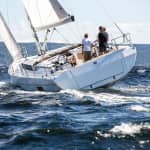
If you want to renew your loyalty to the clinker-built people's boat, Haubold Yachting in Berlin-Spandau offers you the opportunity to have one built. The GRP hulls, which are manufactured in Lauterbach on the island of Rügen in accordance with strict class regulations, are built there and the ready-to-sail boat is sold for prices starting at 79,000 euros, depending on the model. After taking over the Folkboat Centre, which was once founded and run by Erik Andreasen in Kerteminde, Denmark, and then sold to Hamburg, the fourth Folkboat is currently being built there in GRP, optionally with a wooden deck and superstructure.


Conger
The seaworthy dinghy with self-draining cockpit and lockable superstructure was the first dinghy made of GRP in Germany in 1965 and was initially built in the plastics department of the Blohm und Voss shipyard. Since 1978, the company Fiberglas Technik Lehmann + Sohn GmbH has been the manufacturer of the boat, more than 4,000 of which have been sold. Heiko Lehmann, the son from the company name, will be demonstrating the brand new exhibition boat at the trade fair, which he is offering for 14,500 euros.
He builds the five-metre-long boat in accordance with the regulations of an active class association that still organises regattas at which old boats also compete. Its speed potential impressed the YACHT testers back in 1967: "The Conger started planing in winds of 5 to 6 forces. We were sailing with a genoa and using the trapeze. As a result, the Conger developed speeds of up to 8.5 knots."


Varianta
In 1965, Willi Dehler worked with Dutch designer E. G. van de Stadt to develop the perfect solution for his family and himself: a trailerable centreboard boat six and a half metres long with a removable coachroof. The enterprising inventor presented the "Varianta K 3" to the public in 1966, not realising what he was about to unleash. Around 5,000 of these small all-rounders, which were later built in the "Varianta K 4" and "Varianta 65" versions, have been built to this day and are ambitiously sailed in regattas and cruises on inland and coastal waters.
Next summer, the class association will be celebrating its 50th anniversary. Although the boat can no longer be built from scratch - the mould no longer exists - it deserves a mention here, as the example on display in Hall 15 at boot is one of the first and best-maintained Variantas, taking interested trade fair visitors back to the early days of the GRP era. And, as the enterprising exhibitors are happy to reveal, there are always a few examples on the market. From 4,000 euros, buyers get a substantially good boat that is competitive in regattas.


H-Boat
The largest non-Olympic keelboat class in Europe is considered a true classic, even though the 8.28 metre long design by the Finn Hans Groop from 1967 was built from GRP right from the start. It has already proven itself on the Atlantic, but is above all a popular regatta boat. The boat has been built by many different shipyards, including Artekno, Botnia, Ott, Frauscher and Elvstrøm. The brand new model on display in Hall 16 at Yachtsport Eckernförde was built by Saare Yachts in Estonia in accordance with the class regulations.
They even had to be changed by the class association for the licence, because there is no longer a previously prescribed scrim, explains exhibitor Thomas Nielsen. The boss of Yachtsport Eckernförde says that he builds the boat purely out of passion and that the 77,000 euros that enthusiasts pay for it just about covers the costs. There are many interested parties, but with more than 5,300 built, there is always a large supply on the used boat market. However, the elaborately built Saare H-Boat is definitely worth a visit.


Dyas
Although the 7.15 metre long, open keelboat was designed by the Bavarian Helmut Stöberl back in 1970, a genuine construction number 1 will be on display in Hall 15 on the stand of the class associations. It was recently built by the Hein boatyard as the start of a new series. By 2020, 1,500 sister ships had already been built, and even more than 50 years after the prototype was created, they still have loving owners who chase the uncomplicated boat with harness and spinnaker around the tonnes at regattas.
These take place more than 20 times a season throughout Germany and bring 20 to 30 crews to the starting line each time. If you want to shake up the field with a brand new boat, you can buy a competitively equipped example of the timelessly elegant Dyas for around 60,000 euros.


Monas
In 1974, engineer Helmut Stöberl, known for the development of ingenious, timeless sailing boats, designed an open single-handed keelboat, the MONAS. The MONAS is more than forty years "old" and still without an alternative for keelboat fans who prefer to sail alone and without foreship problems in a sporty, fast and safe manner.



Lasse Johannsen
Deputy Editor in Chief YACHT
